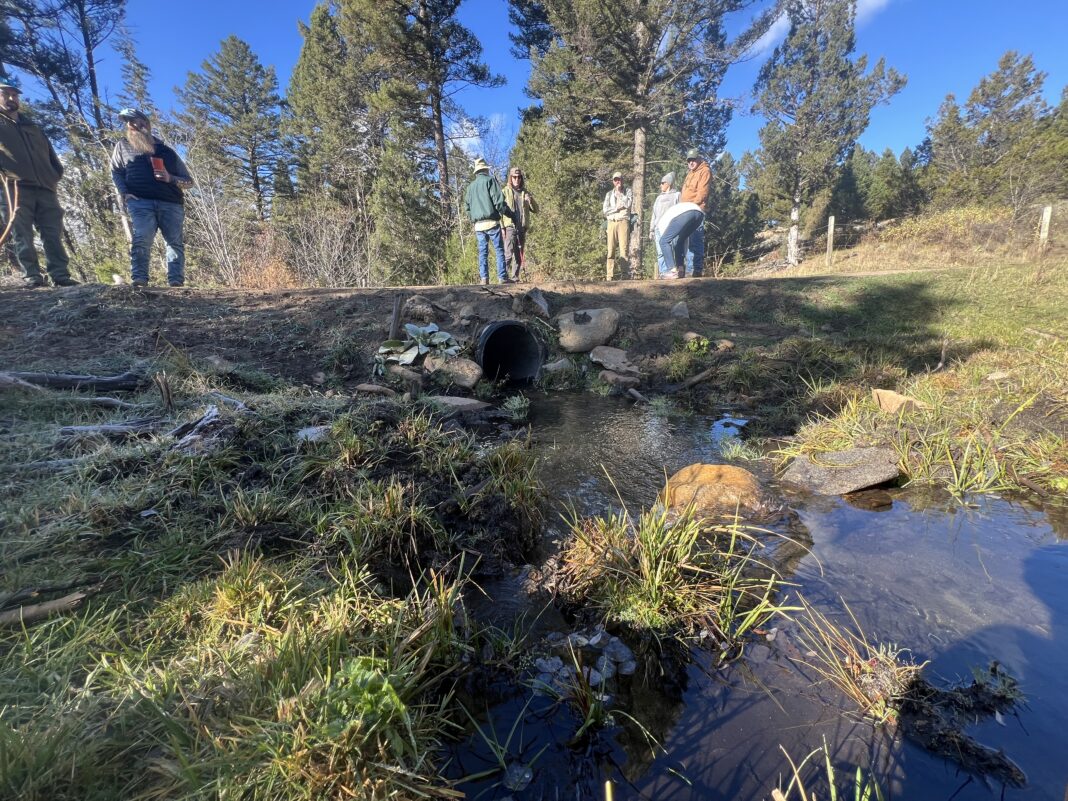
A nearly-forgotten road between Boulder and Elkhorn is being rehabilitated, with significant work already accomplished and the complete effort hoped, depending on available resources and weather, to be completed sometime in the next calendar year. Members of the Elkhorn Working Group (EWG) have combined with the County roads department and the U.S. Forest Service (USFS) to make improvements to McCarty Creek Road. All of the groups stand to gain benefits from the upgrades.
“In the late 1880’s,” Jefferson County Roads Superintendent Bear Taylor explains, “the county was petitioned to open a road between the communities of Elkhorn and Boulder.” The result was a steep road cut into the mountains that followed the flow of McCarty Creek. This became the major connector between the two mining towns, used by horse riders and stagecoaches. “The road that’s there now going into Elkhorn used to be the railroad bed,” Taylor says.
Taylor goes on about the history of McCarty Creek Road, which eventually fell into disuse as new roads like State Hwy. 69 and Interstate-15 were developed for automobile traffic. The road still interested off-road recreational vehicle users, hikers, and other passerby visiting the Elkhorn Mountain area. In past years, there were disputes about ownership of the road, particularly as it runs adjacent to National Forest land, and a riparian area that the Forest Service is concerned with protecting. The road has portions that are often affected by runoff from rain and snow melt, which have caused the creek to overflow the road in many places, according to Taylor. Off-road vehicle usage also increased, which added to the damage inflicted to the roadway as drivers would steer to avoid washouts and create new paths with their vehicles. Often these new trails would cross into the non-vehicular traffic areas of the National Forest, and amplify the damage to the riparian area.