
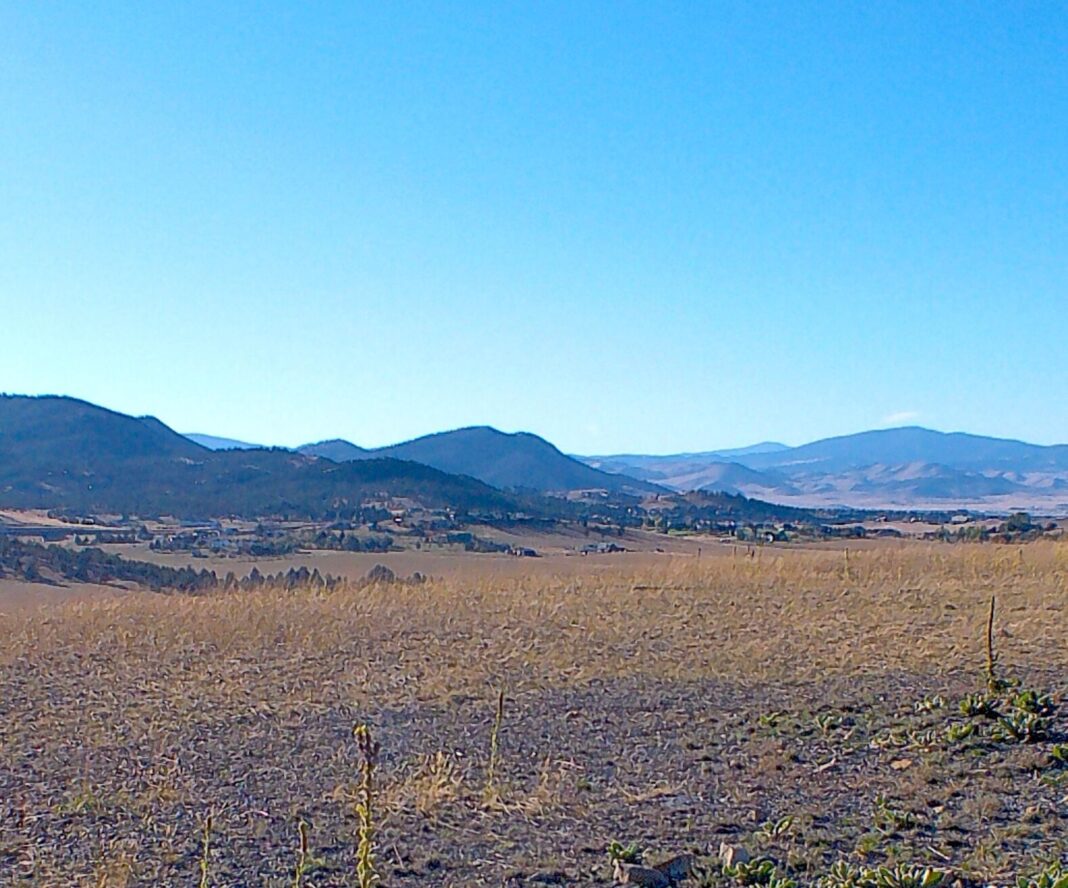
At the September meeting of the County Planning Board, a representative of the Prickly Pear Land Trust (PPLT) introduced a proposal to establish a conservation easement on a privately owned 271-acre parcel near Holmes Gulch in Montana City.
The project, as PPLT wrote the Planning Board, “protects the property’s grasslands and forest, which together supports extremely high wildlife habitat values, especially for a local herd of elk” — and would advance PPLT’s yearslong efforts to protect lands around Mt. Ascension. The proposal was submitted to the county for an advisory review, as required by statute.
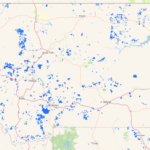
The easement, which PPLT expects to complete this winter, would not be the first in Jefferson County: Since 1998, PPLT has secured multiple conservation easements on relatively modest-sized parcels in the north end of the county, according to the National Conservation Easement Database. Another organization, Montana Land Reliance, has completed even more easement transactions, often involving bigger properties — including 2,395 acres around Haystack Creek in Clancy and 3,751 acres in the Boulder Valley, near Clarke Gulch off Highway 69.
Indeed, the deployment of conservation easements has accelerated, in Montana and across the U.S. The National Conservation Easement Database says 221,256 easements have been put in place nationwide since federal law first allowed them in 1976, protecting nearly 38 million acres. In 2003, according to the Federal Bar Association, that figure was 5 million acres. All but two counties in Montana have some sort of conservation easement agreement in place.
The question is: Do they work?
Conservation easements typically provide significant tax benefits. Under federal law introduced in 2006 and made permanent in 2015, property owners can deduct the value of their easement up to 50% of their annual income, for up to 15 years. In exchange, owners agree to permanently limit certain types of development or use.
In the case of the PPLT’s recent proposal, the property owner would be prohibited from establishing commercial activities including mining, game farms, feed lots, motels, campgrounds, retail stories, or hunting or fishing operations. Subdividing the parcel, erecting new buildings, or constructing roads or trails also would be barred, with some exceptions.
The property owner — whom The Monitor is not naming, at the request of PPLT — would be allowed to conduct ranching activities on the land, and to raise hay and other crops except on land identified as ecologically sensitive. Limited timber harvesting would be permitted with prior approval, and the owner would be permitted to transfer the property as a single parcel.
PPLT, which declined to comment for this story, as well as Montana Land Reliance and other land trust organizations say that conservation easements have helped to preserve the state’s rich natural landscapes, wildlife habitats, and agricultural lands, playing a crucial role in safeguarding the state’s natural resources. In addition to elk, easements help maintain critical habitats for species like grizzly bears, and migratory birds. Land trusts typically describe their effectiveness in terms of scale — the number of acres protected. Montana Land Reliance, one of the oldest and largest such organizations in the state, says it has preserved 1.37 million acres in perpetuity.
And it’s difficult to challenge many of the public benefits that easements generate, like the preservation of open lands whose views can be enjoyed by many citizens, or the protection of wildlife habitats. “The protection of an elk corridor is definitely an example of a public ‘good’ that can result from an easement,” said George Wuerthner, an ecologist and author who wrote an article for The Wildlife News on easements earlier this year.
But Wuertner and some other observers question whether the benefits are worth the economic investment — much of it at the expense of taxpayers. “It’s our money that is subsidizing easements,” Wuerthner said. “With few exceptions, nearly all conservation easements come with significant government-funded subsidies. These losses in tax revenue are all made up by other citizens who must pay higher taxes to maintain services.”
A widely cited study by the Colorado Trust for Public Land explored this tension. It noted that Colorado taxpayers had invested a total of $511 million through 2008 to secure easements on 1.41 million acres of land in the state. And it estimated the economic value of various “ecosystem” benefits of that land, including water supply; flood control; fish and wildlife habitat; recreation; aesthetics; carbon sequestration; and agricultural crop production.
The result: the state’s investment in easements, the Trust calculated, yielded $3.52 billion in public benefits, a return of $6 for every $1 invested.
But such calculations may rely on fuzzy definitions. Wuerthner points out that land owners are allowed to self-classify the preservation value of their properties. A property must have “significant conservation value,” to qualify for an easement. But because evaluations are usually done in private, with hired, third-party assessors, many properties can become conservation easements that may not actually provide much ecological value.
Indeed, Wuerthner and other critics say that the process that land trusts use to acquire properties for easements lacks transparency, with negotiations and appraisals often done far away from public scrutiny. The justification is that these are “private transactions,” even when the outcome may affect other community residents and landowners — but the lack of visibility, Wuerthner says, leaves the usual local government checks and balances much less effective.
“Because conservation easements are arranged outside of public purview and discussion, with little public transparency, weighing whether fee acquisition vs conservation easement would better serve public interest is seldom part of a public debate,” according to Wuerthner.
In fact, PPLT declined to comment for this story. Executive Director Mary Hollow explained that the only reason its proposal was presented to the Planning Board — in a public meeting – was because Montana law requires that county governments provide a non-binding review of easement transactions before they are completed.
Wuerthner and others, like the Center for Agriculture and Food Systems also point out the difficulty in managing easements. Land trusts, nonprofits, and government agencies must monitor properties regularly to ensure compliance, which can strain their resources and capacity.
Conservation easements are typically designed to last in perpetuity, meaning they remain in effect even if the land is sold. However, future generations of landowners may not always agree with or prioritize the restrictions set by the original owner, leading to potential legal disputes or challenges in enforcement. “Because there are no uniform codes or standards, the proliferation of conservation easements presents a major legal challenge to future generations since nearly every term could be subject to different legal interpretations, making monitoring and enforcement difficult,” Wuerthner said.
Many Montana landowners are committed to preserving their land for future generations, and the incentives provided by conservation easements have made it financially feasible for them to do so. The public’s strong appreciation for outdoor recreation, wildlife, and open spaces has also bolstered support for easement efforts. But measuring the actual long-term impact remains a challenge.