
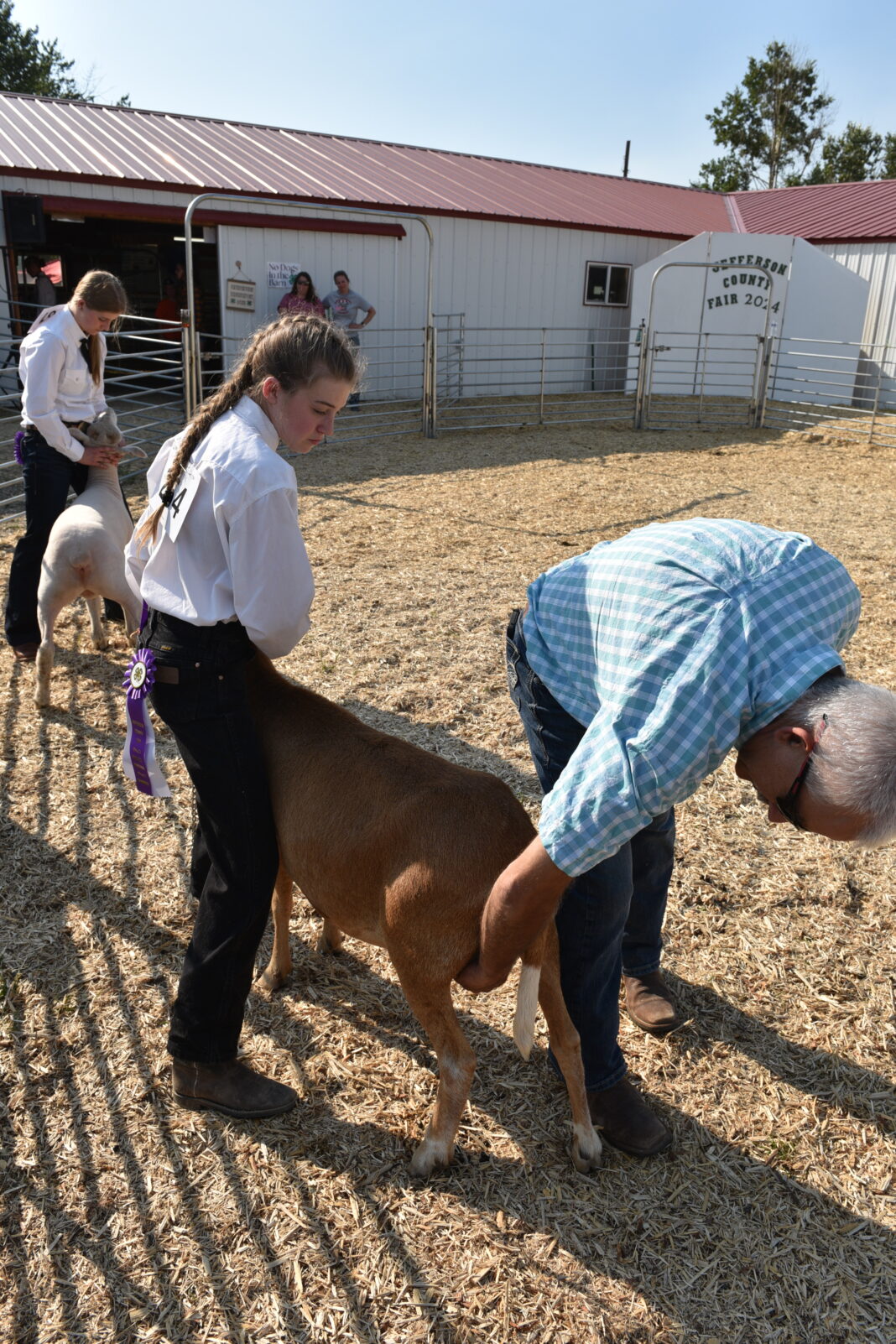
County fairs have been an integral part of agricultural communities since the early 1800’s. (The Franklin County Fair in Greenfield, Mass., started in 1848, holds the honor of being the longest continuously run county fair in the U.S.) Historically, fairs fostered vibrant, local competition among local farmers: Having the purple ribbon milk cow or basket of apples was a big deal, and sales transactions often followed.
But most importantly, fairs have been and continue to be a community event – a time when everyone gets together to celebrate agriculture, and when you can take a break and meet neighbors and friends that you haven’t seen all summer.
The exhibition of livestock has always been a central part of county fairs. When 4-H started nationally in 1914, fairs became the place where the youth of the agricultural communities would showcase their projects – livestock, and also baked goods, sewing, gardening, wood working, etc. They were judged and awarded ribbons, with purple usually the highest award.
To an outside spectator, livestock judging, particularly market livestock, can be a bit confusing. What is the judge looking for in that purple ribbon pig or steer?
The condensed explanation is that a market livestock judge is ultimately trying to figure out which animal, while still alive, shows the greatest potential for meat yield and quality. Health and soundness of the animal are considerations as well. Judges look for characteristics such as a long straight back, lots of muscling in the shoulders, loin, and hips, and just the right amount of finish or fat cover.
But there is another competition that occurs after the ribbons have been awarded and the last animal leaves the barn. At most Montana fairs, market animals’ carcasses are evaluated for yield and quality. In a way, this is where we see if the judge was accurate: Sometimes an animal has all the characteristics a judge is looking for in the show ring, but the actual carcass does not translate to a high quality meat product for the consumer.
How are market animals’ carcasses evaluated? Yield, also known as the dressing percentage, is the proportion of an animal’s live weight that remains after it is processed. The yield grade along with the quality grade, which is basically the degree of marbling, is determined for each animal. Beef, hogs, sheep and goats all have their own criteria. Let’s look at the beef and hog carcass competition:
Yield grades are calculated for beef, and they range from 1 to 5 with 1 being the best. The formula is as follows: Yield Grade = 2.5 + (2.5 x backfat, in inches) = (0.2 x kidney and pelvic fat) + (0.0038 x hot carcass weight) – (0.32 x rib eye area, in square inches). Lots of muscling, and not excessive fat are characteristics that will make a better yield.
Quality grades are based on how much intramuscular fat, also known as marbling, there is in the ribeye. A ribeye with lots of intramuscular fat might get a prime or choice grade (prime being the best), or even a select grade, which means there is very little intramuscular fat. The quality grade is important because it is a good indicator of how enjoyable that steak might be for the consumer. In general, a steak with very little intramuscular fat will not be juicy and may be tough for the consumer.
The hog carcass competition is a little more involved. The data collected includes: hot carcass weight, loin muscle area, back fat measured at the 10th rib, intramuscular fat (marbling) in the loin, color score, firmness score, and wetness score. All of this information determines which animal will have the best yield and quality.
So why is this competition, held far from the glamor of the show ring, so important? The meat from animals that ends up on someone’s plate is ultimately what matters. A steer’s long, nicely groomed hair and good looks in the show judging have nothing to do with the ribeye steak on the consumer’s plate.
The collection and understanding of the data from the carcass grading competitions is essential for 4-H’ers trying to grow and feed the best animals, but it is also great information for the animal’s breeder. A hog grower or rancher can make more informed breeding decisions when they know how their finished product performs.
The Symbol of Excellence (SOE) program was initiated in 1984 as a joint effort between the MSU Extension Service and Montana Pork Producers Council as a way of recognizing youth and swine breeders who select and raise market hogs that meet carcass merit standards.
Thank you to everyone who came to the fair this year. Whether you watched the 4-H youth show their projects, caught the rodeo, or just came to check out the animals and enjoy fair food, you participated and helped contribute to a successful community gathering that has been occurring for hundreds of years, and will continue for future generations to enjoy and learn.
Brent Sarchet, a certified International Society of Arboriculture (ISA) arborist certified crop advisor, runs Finn Creek Farm outside of Boulder with his wife Andrea. Ask him questions at bsarchet@gmail.com.