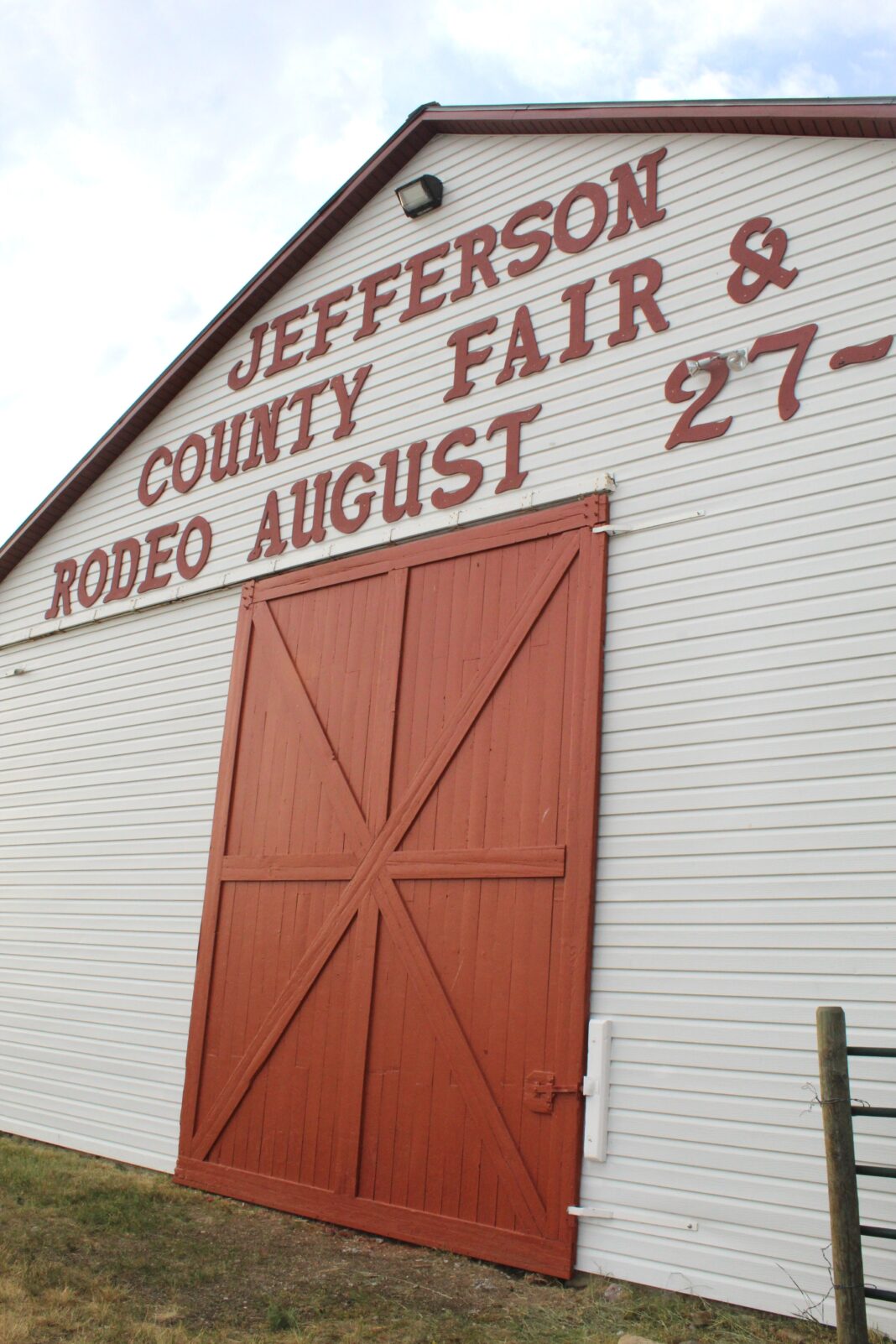
It’s the evening of August 6, slightly more than two weeks before the Jefferson County Fair and Rodeo is scheduled to kick off. In Volunteer Hall, the Fair Board has gathered for its final formal meeting before the event.
There’s a lot to talk about.
For one thing, Marilyn McCauley reminds the group, the fair headquarters building needs to be swept of flies before the quilt exhibits are set up. Judges still must be recruited for the Fine Arts and Photography categories. The new arena lights have to be tested.
The Fair and Rodeo is a kaleidoscope of details like those. Each year, throngs of residents and visitors troop through the fairgrounds over four days to enter exhibits in hundreds of categories, watch hundreds of rodeo riders, dance in the barn and consume barbecue, baked goods and all manner of fried foods.
But all those exhibits don’t just pop up each August. The musicians on the gazebo stage don’t drop in looking for gigs, and the fairgrounds don’t take care of themselves.
The Fair Board, comprised of volunteers dedicated to providing a fun community event, is the team that makes all that happen. It was created in 1983 by the County Commissioners to oversee the public monies that are spent to produce the fair. Because it is a public organization, the board meets regularly under open public meeting laws to discuss details and status of the next event.
(The Jefferson County Rodeo Association, which organizes Thursday evening’s “Big Deal” In-County Rodeo and the Northern Rodeo Association pro events on Friday and Saturday, is a separate organization, independent of the county.)
The Fair Board meeting reveals the complexities of putting on a four-day event with many, many moving parts. The members discuss how to accommodate this year’s “creation station,” wherein fairgoers use glue guns, pipe cleaners and other materials to turn a fruit or vegetable into craft masterpieces in real time. This year’s veggie of choice is broccoli — but will its aromas fight those of the floral arrangements in the same room? Leah Lewis mentions a new ax throwing exhibit this year — at which County Events Director Bruce Binkowski quickly clarifies that real axes will not be used.
Members discuss an emerging challenge: Some of the regular food vendors will not be able to attend the fair this year because they don’t have enough staff, an increasingly common complaint over the past few years. Binkowski provides a report on the advertising and publicity he generates to attract fair-goers, stretching from Butte to Helena in both print and broadcast media.
The bolts on the roof of the carousel have been tightened, McCauley reports. McCauley, who has been a Fair Board member since the beginning, is the chief source of knowledge about the fairgrounds property and associated buildings, spinning out from memory details about the location of electrical outlets that can be used, and the loads each can handle. She took over much of the property’s maintenance after caretaker Glenn Bruce died last September, until the county hired Dave Miller and Sara Johnson to do the job in May.
Then, the Board focuses on how to get more volunteers involved. Terry Minow says the fair has between 100 and 200 volunteers involved each year, performing a multitude of tasks during the four days of the fair. Keeping tabs on who’s doing what, she noted, is always a big challenge. The board is still looking for help in cleanup activities and parking control.
The meeting winds down. Despite all the challenges and the myriad details still being finalized, it looks like the 40th fair will come off. “We’ll meet again next month, after the fair is over,” Minow says. “We’ll go over how it went, what worked, what didn’t.
“And then start working on next year right away.”