
The Friday of Fair & Rodeo Week brings a surge in activity and energy. Attendance grows; the odors of grilled and fried foods saturates the grounds; and excitement builds around the pro rodeo events.
And in a quieter bit of drama, fair exhibitors await a judgment on hundreds of homemade entries — crafts, art, flowers, vegetables, cakes and pies — hoping their work merits a ribbon award.
At 4 p.m., about 20 exhibit judges enter the small fairgrounds building that once served as a milking parlor. A sign on the door tells other fairgoers that the building is closed for judging.
Inside, Fair Board Chairperson Terry Minow greets the volunteers and provides a briefing on how arts and crafts exhibits are to be judged. She also heads off some anxiety about a newspaper reporter in the room. “He is just here to observe. No names and no pictures please,” Minow says.
The exhibits are divided into logical sections, including age groups and type of exhibit. Exhibits are entered into various Departments – Photography and Needlework have the most entries, but Crafts and Fine Arts also get many exhibits.
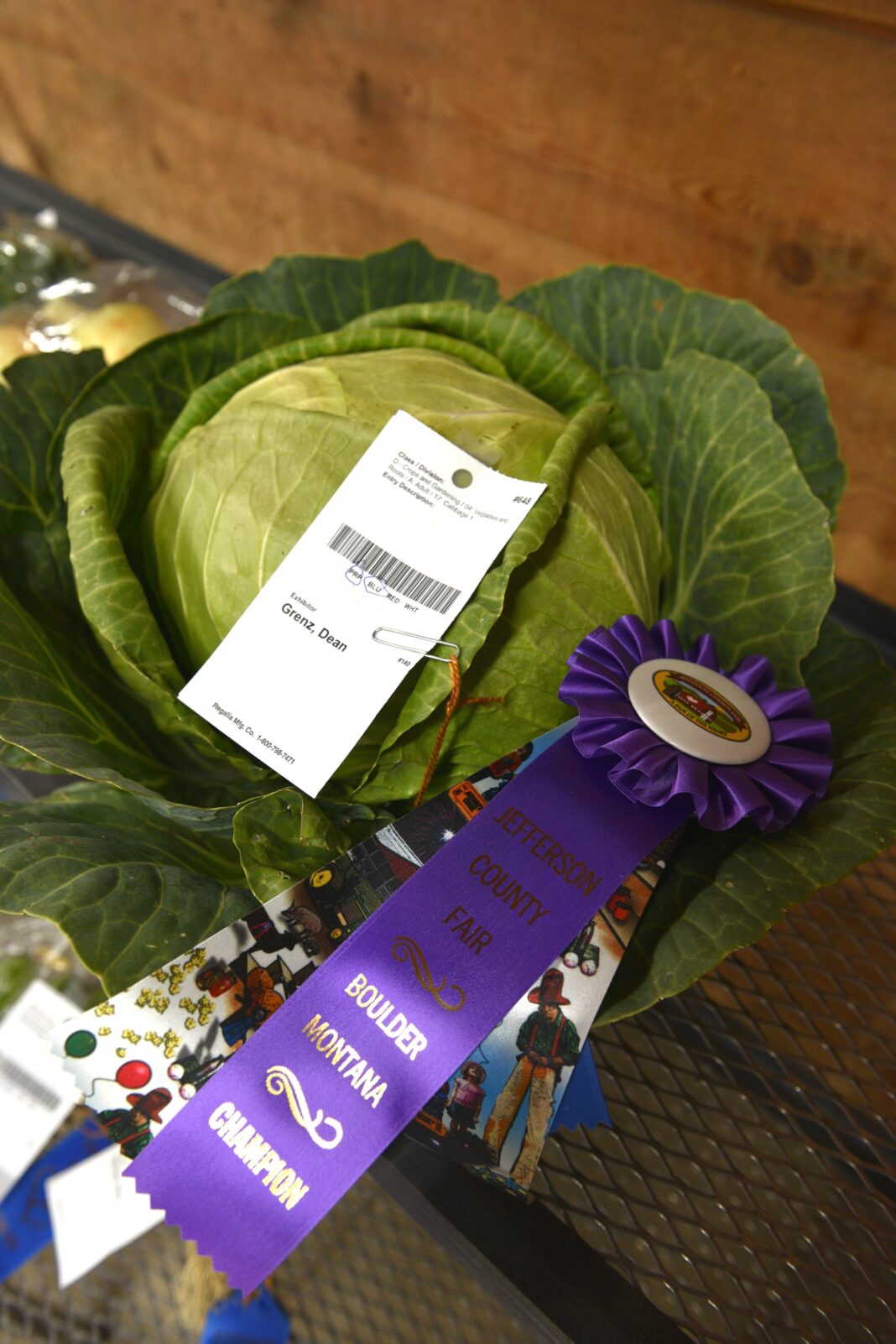
Each entry is reviewed multiple times. First, by the judges and a superintendent, who make the initial distinctions as to who earned a white, red or blue ribbon. Then, a second review of the blue ribbon winners, to determine which should receive purple ribbons. A final pass of those purple ribbon winners leads to the highly coveted Best In Show ribbons.
Another pass by the superintendents is done to evaluate exhibits that did not receive purple ribbons, but which may merit Heart Ribbons for special merit. The awards are not just decorative: Best In Show and Heart Ribbon awards come with cash prizes of $5. Purple ribbons earn exhibitors $10.
In the initial briefing, Minow tells the judges that all exhibits are to be judged on their own merit – not compared against other exhibits. “So if you think every one deserves a blue ribbon,” Minow coaches, “they all get a blue ribbon.”
Having received their instructions, the judges disperse throughout the building to their Departments. That’s when they get down to business, with exhibits in each Department receiving serious consideration and analysis.
Needlework judges handle each item, carefully feeling and inspecting stitches and knots for uniformity. Quilts are unfolded and viewed in the open, with judges commenting on color schemes and stitching complexity. Photographs are scrutinized for light streaks or other film flaws. The judges note their comments on the back of the exhibit’s entry card, then award the white, red and blue ribbon winners.
It’s not always easy to make an evaluation. A pair of judges examine one exhibit together, trying to determine the merits of the unusual entry. Both express some confusion, then agree to add a note to the back of the entry card with suggestions on how to make the exhibit better next year.
After a couple of hours, the Arts and Crafts exhibits all have been decorated with prize ribbons, flagging the winners to fair visitors and adding to the festive quality of the exhibition. And the judges have left the building and blended back into the fair crowd, knowing they have done their part to maintain a long tradition.