


Jefferson County voters fell in line with the rest of the state as Montana held its primary elections June 4.
Majorities of county voters backed Republican Tim Sheehy and Democrat Sen. Jon Tester as candidates for U.S. Senate, and Republican Troy Downing and Democrat John B. Driscoll as candidates for Montana’s U.S. House of Representatives for the 2nd Congressional District.
All four candidates won the primaries and will move on to the general election in November. Jefferson County voters also favored Republican incumbent Greg Gianforte and Democrat Ryan Busse to compete for the Montana governorship, as did voters statewide.
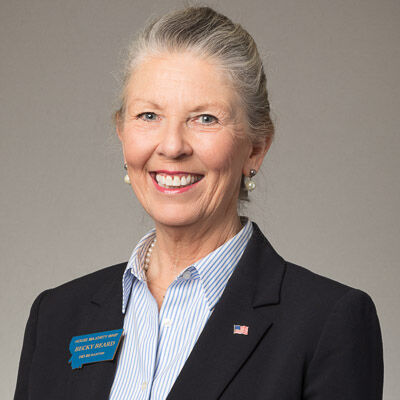
Becky Beard won the Republican primary for the newly created state Senate District 38, which includes most of Jefferson, Powell and Granite counties. With 1103 votes, she defeated Gregory Frazer of Deer Lodge, who won 540 votes, and Jeremy Mygland of Clancy, with 813 votes, and will now take on Democrat Jeffrey Benson, who ran unopposed in the Democratic primary.
Republican Jill Sark and Democrat Luke Muskiewicz won their primaries for House District 79, which skirts Jefferson County on the northwest. And Republican Ray Shaw won in Senate District 35, on the county’s eastern edge.
Jefferson County and Boulder voters turned down once-a-decade ballot resolutions that would have commissioned governmental reviews charged with evaluating and potentially changing existing governing structures. The Jefferson County proposal was struck down by 2784 votes against to 1286 votes for, while Boulder’s was struck down by 162 votes against and 129 votes for. Whitehall voters approved the review, which will be administered over the next two years, with 141 votes for to 121 votes against.
Between 46-48 percent of the county’s registered voters participated in the primary election, according to Clerk and Recorder Ginger Kunz. During the 2020 primary election, voter participation spiked in Jefferson County to nearly 60 percent, most likely due to the prevalence of mail-in voting. As the 46-48 percent participation rate is on par with pre-pandemic voting levels, it is likely that residents are returning to more consistently observed voting behavior.