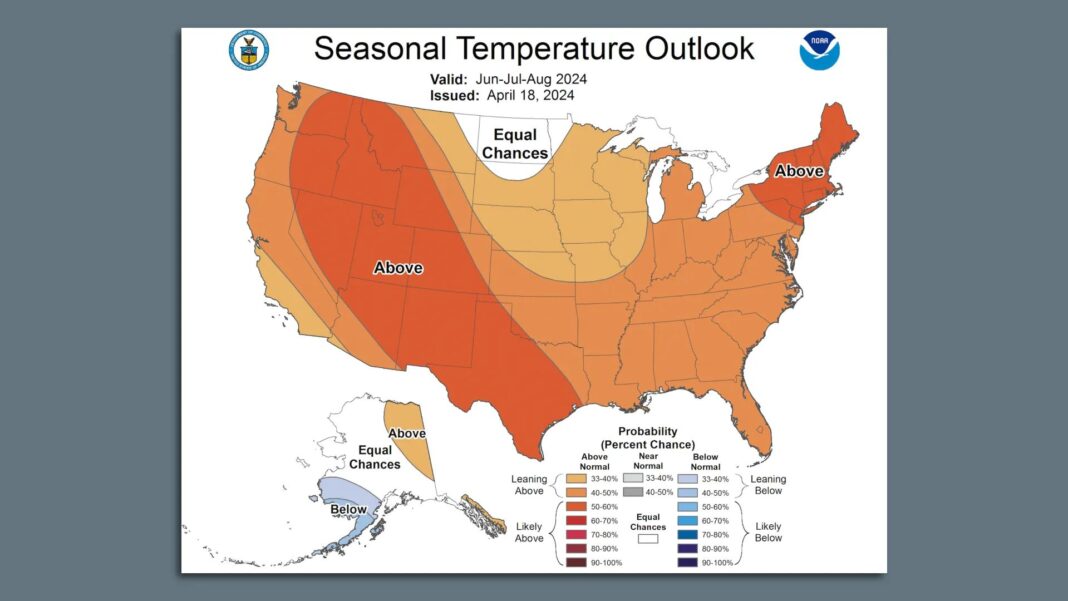
Jefferson County residents may see a warmer than usual summer this year, according to the most recent forecast from the National Oceanic and Atmospheric Administration (NOAA) Climate Prediction Center. Less precipitation is predicted during the next 3-4 months, as well.
The NOAA report, issued on Apr. 11, showed southwest Montana stands a chance of experiencing warmer temperatures due to the current transition from a fading El Nino condition in the Pacific Ocean to a La Nina climate cycle. The result of the change is cooler ocean waters,which generally leads to warmer inland temperatures. The current El Nino effect is expected to break down fully between April and June, with the La Nina changes expected between June and August.
These climate changes in the ocean are monitored by NOAA, with information then shared with the Centers for Disease Control (CDC), which monitors heat-related health events. The data is used to create forecasts of where high-pressure conditions could create “heat domes” during the summer, creating dangerous health conditions as they stall over regions with unrelenting high temperatures. The CDC can then focus its relief efforts on those areas most significantly impacted.
Some effects of the lack of snowpack over the winter are also being measured. Of the three Snow Water Equivalent monitors in the county, two are showing the second lowest levels since last fall, while a third, located at Froehner Meadows, is showing the lowest levels of water equivalents in months.
Low snowpack and water levels, combined with predictions of less rain over the spring and summer, has caused some groups to take early action in anticipation of heightened wildfire risk. County Disaster and Emergency Services Coordinator Doug Dodge said he has several meetings with local groups to help raise fire awareness. Dodge reminded local fire departments that it’s “important for all departments to prepare, especially for new members.” Dodge said the Whitehall fire department recently put out its fourth wildfire this year.
Firefighters are not the only ones who might need to prepare for a hot summer. Ranchers and farmers may be looking for watering holes for livestock, and may find there isn’t enough irrigation water in the later summer months for alfalfa and hay fields.
“Ranching is challenging because you never quite know what the weather is going to do!” local rancher Leah Lewis told The Monitor. “Often it’s a gamble to apply high priced fertilizer if you don’t know if there will be enough water to irrigate the fields,” Lewis said.
While those are problems specific to ranchers and firefighters, the effects of long, dry summer days will be affecting everyone. A report published by the Lancet Countdown medical journal stated that last year, people worldwide were exposed to, on average, 86 days of health-threatening high temperatures. 2023 went down in history as the warmest year on record. The world has already seen “detrimental effects on health, including increasing hazardous heatwaves, dangerous outdoor work conditions, and heat-related deaths,” said the Lancet Countdown.