
What is prevention? This is a great question to address in the second in our series of columns. Each of us engages in various ways with prevention in our daily lives. Parents with toddlers, for example, take measures in their homes to make sure their little ones are safe around electrical outlets or sharp corners, among other potential hazards.
I like this example someone shared recently: When a sapling is planted, the tender plant is tethered to stakes to support it. That gets to the heart of the science of prevention. Over the past 50 years, many different strands of research and practice have contributed to what is now called prevention science. It has evolved from the early days of, “Just say no” to actual fact-based approaches that have demonstrated positive results.
We’re focused here on primary prevention — like the tethering of saplings. In Montana, every county has a prevention specialist who has been trained and educated to implement programs, policies and procedures that decrease risk factors and increase protective factors across the individual, family and school levels.
By increasing protective factors such as youth development, family resilience, and strong communities, prevention can reduce the incidence of nicotine, alcohol, cannabis, opioids, and other drug misuse. It also can reduce the number of mental health problems, as well as academic failure.
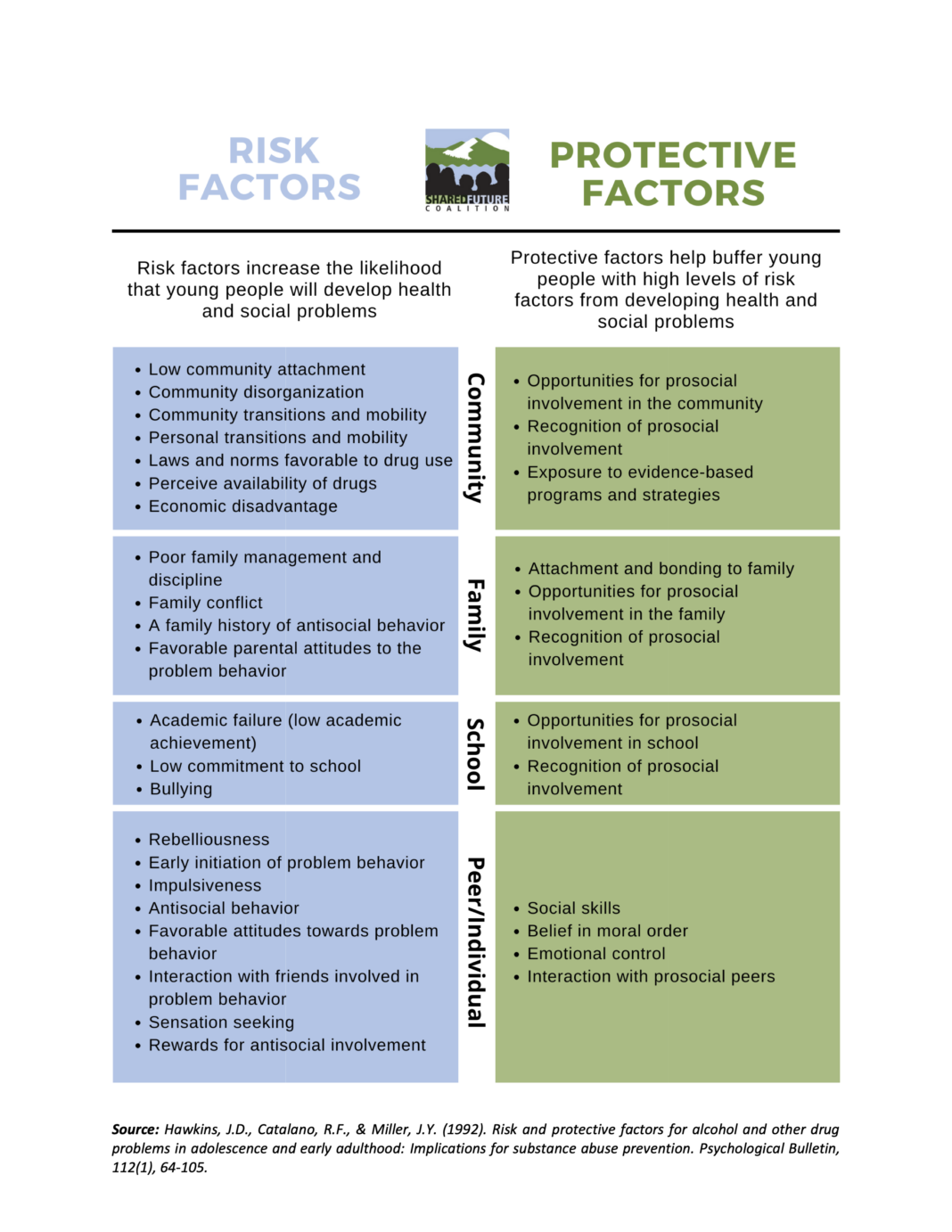
The chart to the right shows in more detail examples of risk and protective factors. Reduction of risk factors and enhancement of protective factors have seen measurable improvements in the health and safety of young people.
Here is what Jefferson County is doing to enhance protective factors:
• Parenting programs such as Active Parenting Now encourage bonding and clear standards in families.
• School curricula to address social and emotional development have been proven to address life skills in youth. Some examples are PAX Good Behavior Game and Second Step, which are being used in Jefferson County schools.
• Legislation and enforcement of policies, laws and ordinances reduce the availability of and access to tobacco, alcohol and other drugs among young people.
• Presenting youth with facts about brain development and how substance use will damage their brain growth process builds literacy and better decision-making in those areas.
• Annual assessments for middle- and high school students such as the Prevention Needs Assessment and the Youth Risk Behavioral Survey provide vital opportunities to hear from youth concerning their challenges and opportunities.
Prevention programs are powerful and necessary tools to promote the health of youth, families, and communities. Research shows that prevention saves lives and money. For every dollar spent on prevention, a community will see a return of investment of $13-$18.
Our next article will focus on community engagement: Yes, you can participate in prevention.
Barb Reiter is Jefferson County’s prevention office. Contact her at breiter@jeffersoncounty-mt.gov or (406) 461-3618.