
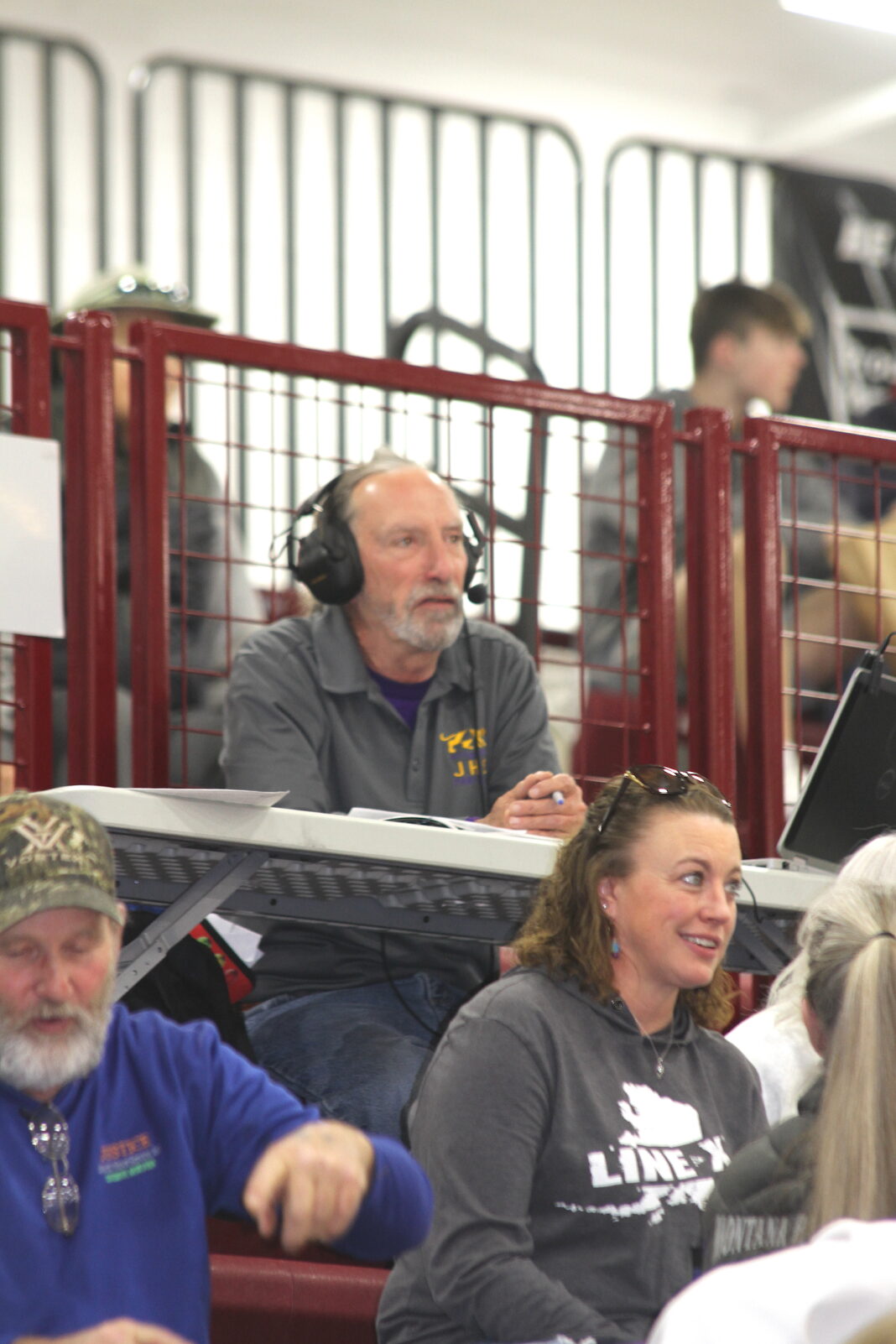
The success of Jefferson High’s basketball teams this post-season means I will once again be in the media section at First Interstate Arena at Metra Park in Billings this weekend. I’ll be broadcasting the boys’ and girls’ Panther games from the Montana High School Association (MHSA) Southern B Division Basketball Tournament on the internet and FM radio.
It has always been an honor and privilege for me to broadcast the Panthers’ basketball, football and volleyball matches. The experience has also revealed that my own perspective changes when I press the “On Air” switch.
We have had some amazing broadcast success (and a few spectacular failures) from places like Metra Park, Washington-Grizzly Stadium in Missoula, and the Brick Breeden Field House at MSU. Even from small gyms, like Harrison-Willow Creek, White Sulphur Springs, and Choteau. Sometimes I broadcast from a painting scaffolding platform over a volleyball court, sometimes in a windy, frozen press box on the football field.
After over 15 years of bringing the Panther events to listeners around the county, and world, I still find the most nerve-racking moment is the 60 seconds before I connect from a remote location to the broadcast system. I have tried to lighten that panic with preparation. One important thing I have learned is to try to always have something to say – be prepared! I will spend two to four hours before each sporting event researching the players and the past meetings between teams.
There are many JHS Boosters who contribute to support the radio broadcasts, so I take time to recognize them every game or concert. There are also corporate sponsors for the MHSA who must be acknowledged during post-season tournaments. All of that work is incorporated into a “script” that tries to follow the flow and timing of the games. Armed with always having something to say, the task then becomes to reasonably fit those announcements to breaks in game action.
All should be good now, right?
Back to that final 60 seconds before connecting to listeners: during that time, I’m running through my checklist of technical items that need to be done for the magic to work: Internet still working? Microphone on? Sound levels look okay? Recording started? Any names on the rosters that look hard to pronounce and need practice? Every game and concert gets that “preflight check.”
When I’m as confident as possible things will work, or simply have run out of time to worry, I put the headset on, and click the buttons on the laptop that gets my voice out to the internet and FM radio. The worry is over. Then, it either works or it doesn’t.
That is when I’ve begun to notice a change in myself. I am a Jefferson Panther fan, first and foremost, right up until that moment when I go on air. After that, I am just the announcer, doing his best to paint a word picture for those who can only hear, not see the action.
That means being fair to both teams, coaches and players. Also the referees; just like the kids on the floor, the officials will make mistakes. So do I – frequently! I don’t need someone with a microphone pointing that out to the internet. So I make a point to avoid criticism. Just focus on describing what is happening.
Yes, sometimes I might single out an obvious bad pass or a needless foul, or a close call at the volleyball net (fortunately, there is not very much controversy at JHS concerts!). But I try to avoid singling out specific actions too frequently, because most games rarely come down to any single play. If the team is 20 points ahead, that one missed call or dropped pass likely has very little impact on the outcome. Plus, there may be more to what is happening in the competition than even someone like me, the radio announcer, sitting in the best seats in the house, may be unaware of.
Another change that occurs while the headset is on is the interaction I have with the fans. Sometimes, I will be positioned in a media area or press box so I don’t annoy the other fans by talking to myself all night. Other times, especially during basketball tournaments, I may be seated right next to fans who must endure the endless talking and my frequent mispronunciation of the player’s names. They might be Jefferson fans, or might not. I’ll be friendly and social with them right up until that on-air moment. Then, I only hear the same game sounds and fan reactions that the listeners do in my headset.
I try to react appropriately to that volume when the fans cheer a touchdown or nice three-point shot. Or the hush that falls on a crowd when a player goes down hurt. I’d like to think that brings a little more life to the radio show. Maybe it helps the listener feel more involved in the wonderful temporary community that forms at Montana high school events.
Eventually, the game ends, the technical steps on the computer are reversed, and the radio stations go back to regular programming. Finally, the headset comes off. I quickly save my recording and pack up the broadcast gear and make my way to the exit. I look for an opportunity to thank the tournament coordinator or school activities director for allowing me the privilege to work at their venue or school.
Now it’s time to start getting ready for the next broadcast. Once again, I rejoin the world of the player’s family and friends who attended, and my view changes back to being a Panther fan.
And if I still have any voice left, I talk to them about what a great game that was, and how well those kids did!
Jefferson High School sports and concerts can be heard on the internet at www.elkhornmountainsradio.com, and frequently on Jefferson County LP-FM stations throughout the county.


