
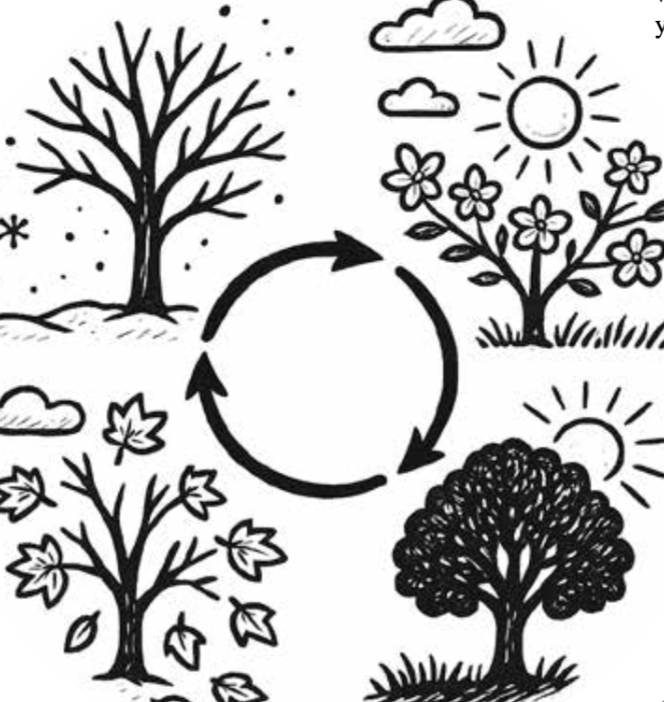
“To every thing there is a season, and a time to every purpose under the heaven” — Ecclesiastes 3.
Fall, or should I say winter, appears to be upon us. The days are shorter. Trees are turning color and losing leaves. We’ve already had one decent snowfall. In the march of time from season to season, we always see the environment around us change. It’s the nature of things.
Yet within this constant movement there are many variations: drought and flood, wet periods and dry stretches; heat waves, devastating cold, and more. In Montana, from one year to another, it’s impossible to know what might happen within each season.
Years ago, when I worked in hydropower generation for an Oregon utility company, one of my tasks was to compile a hydrologic forecast for area rivers and use that to create a power generation forecast. We typically used a 10-year record of hydrologic flows, with a lot of massaging for variables like El Nino, La Nina, and the Pacific Decadal Oscillation (PDO), a long-term climate pattern that affects Pacific Ocean temperatures and weather. Fun stuff.
We used to say that any forecast we made had one guarantee: it was going to be wrong. Water years run from Oct. 1 to Sept. 30. Every year the vice president of our group would drop by my desk in mid-October and ask me what kind of a year we were going to have. I’d always respond carefully, as water year flows are mere statistical probabilities. You look at what happened over the last 10, 30, 50 or even 100 years, and extrapolate from there.
Of course, you never know when you’re going to run into a severe outlier. But you did know that there was no such thing as a typical flow. It was always shifting, and all you had was a statistical probability to present to your superiors. And you knew it would be wrong.
I find it interesting every time I read an article about the weather that starts out with a headline like, “Most rainfall in 10 years hits XYZ, resulting in widespread flooding.” Really? Ten years? In the overall scheme of things, that’s a drop in the bucket (pun intended).
When we look at how the weather around us changes, our period of experience and recorded readings is a blink of an eye compared to geologic time. Examining growth rings on ancient trees and glacial core samples gives us a much clearer picture and can teach us more about change from year to year and century to century.
Seasons come and seasons go. And every one is different, just within the normal variability of Mother Nature. But what about certain extraordinary events? The year 1816 is widely referred to as the Year Without a Summer. Evidence suggests that the massive April 1815 eruption of Mount Tambora in modern-day Indonesia released volcanic ash and gases that blocked the sun, leading to global cooling. Much of the Northern Hemisphere was affected, with food shortages and economic distress.
How would we handle a similar event today? With a world population of more than 8 billion, how many might starve in distressed regions?
This makes me wonder if we are missing some purpose in all of this. We still build homes in flood plains, and homes unable to withstand earthquakes and hurricanes. We grow more than enough food to feed the world but for some reason we can’t get it to those who need it. Is it because the logistics are too complex? Or because we cannot read the seasons?
It’s not just about weather. Our natural human seasons are always shifting as well. The rest of that passage from Ecclesiastes 3 presents a laundry list: life, death, war, peace, planting, reaping, loving, hating, weeping, laughing, mourning, dancing. The lesson is that we cannot simply choose to remain in a single season, because the moment you feel comfortable, the season will change – just like the weather.
To every thing there is a season, and a time to every purpose under the heaven. Life, in all its randomness, leads us inevitably in the direction of some purpose. All of these seasons shape our lives, and cause us to become who we are, not because of the season itself, but because of how we react and live through it.
The Divine is present in all things. The Divine continues to work in creation through seasons we experience in our lives. We see war, peace, life, death, planting, reaping, loving, hating, joy, sorrow and so much more. How we move forward is determined by how we experience and live through the seasons of our lives. So how do you read the seasons of your life?
Roger Reynolds, a Jefferson City resident, is an ordained Episcopalian deacon.