
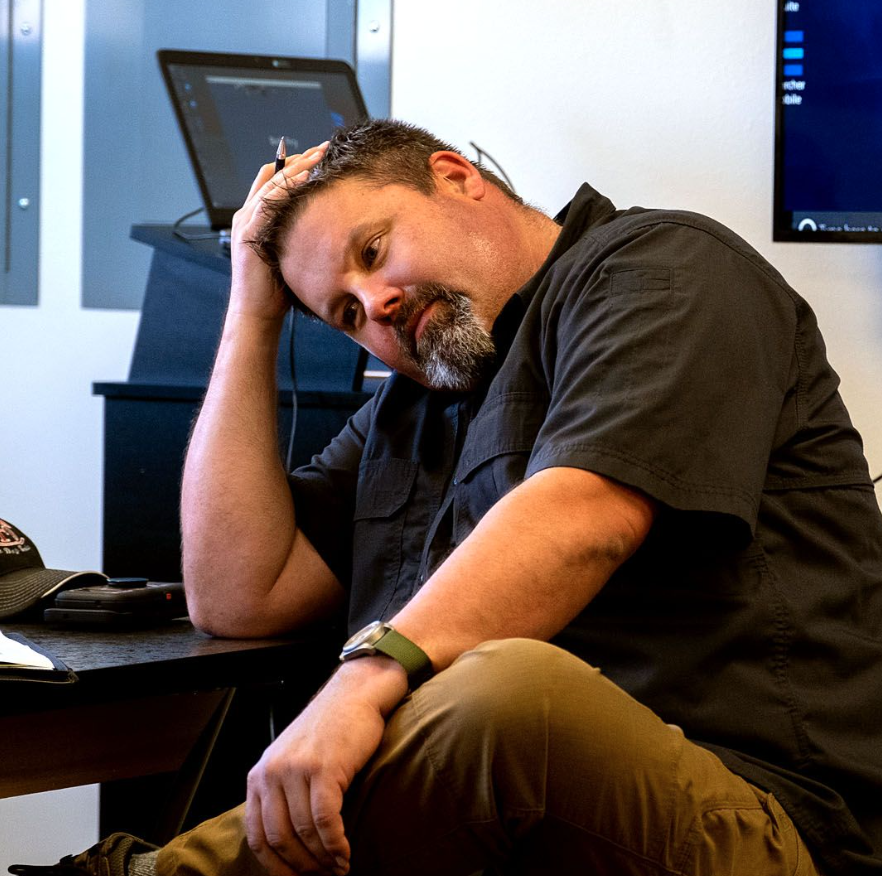
Doug Dodge lives happily in the weeds. As the county’s director of Disaster and Emergency Services, he tends to the continuous updating of a 600-plus page Emergency Operations Plan, a highly detailed compendium of the county’s structures and processes for disaster mitigation, preparedness, response and recovery. He also co-authored the county’s 78-page population protection report and its 63-page hazard mitigation plan.
So it frustrates Dodge to have to bullet-point his work in multiple-choice questions and one-sentence comments. “Management by check-box is not the way I do things,” he says.
That is, however, exactly what Montana requires for its annual Threat & Hazard Identification (THIRA) and National Incident Management System (NIMS) surveys, which are meant to identify priorities in ways that inform the state’s training programs and its applications for federal funding.
This year’s edition is due by month’s end so Dodge, with input from the county’s Local Emergency Planning Committee (LEPC), have dutifully completed the surveys. The results are not much changed from the 2024 iteration — but they do provide a window into county priorities and challenges.
The THIRA survey, for example, asks that counties describe their plan to reduce gaps over the next year in top priority emergency capabilities. (Another frustration: the survey only lets you choose five; Dodge believes that most all emergency priorities are high.)
In response, the County described its efforts to expand communications capabilities to manage large events. Specifically, the county has acquired a mobile communications center that should help it synchronize comms between its dispatch center and other public safety agencies at the Headwaters Country Jam festival each August. (Last spring, FEMA finally unpaused a 2024 grant for the center that had been held up by government reviews.)
The County also said it’s seeking to fill gaps in its emergency medical services. This is not a new issue: Especially since the 2022 closure of Eagle Ambulance, which served the north county, emergency medical service agencies have struggled to keep up with demand.
Emergency medicine “is a huge challenge,” Dodge says. “I want to make sure that that is high on the State’s and feds’ radar. It’s a huge priority for most rural communities.”
In the short run, the THIRA and NIMS reports help the State more than the County. But Dodge hopes the intelligence will inform longer-term strategy and investments that ultimately serve Jefferson and other rural communities.
He notes that, “especially for small emergency management departments, we are charged with keeping our heads above water.” That’s just a function of time and resources. “It’s very difficult to be progressive in expanding our programs. We all want to tackle big issues, and we do try, but for many Montana counties, just sustaining programs is all they have capacity to do.”