
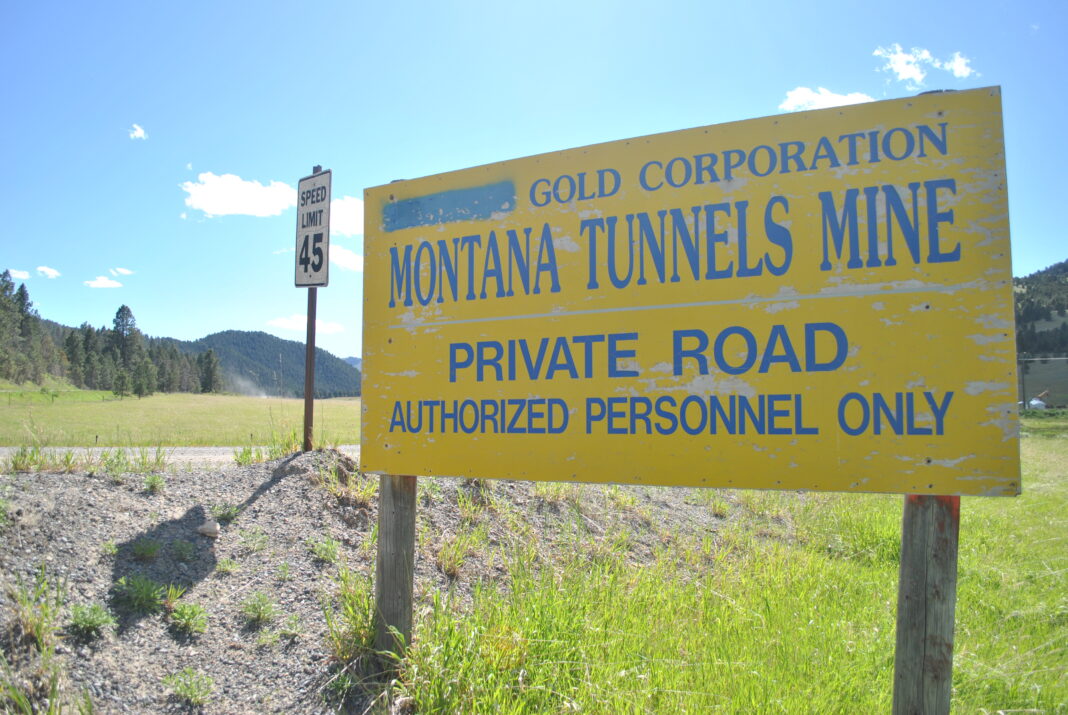
The long and winding road of Montana Tunnels Mining has taken its latest turn, with legal action from the state that could ultimately force a sale of the company’s troubled mine outside Jefferson City.
In an amended complaint filed July 10, Montana’s Department of Environmental Quality (DEQ) asked the Fifth Judicial District Court to foreclose and sell the shuttered mine property, with proceeds going toward the environmental clean up of decades of mining activity.
The request follows the dismissal last year of Montana Tunnels’ (MTMI) Chapter 11 bankruptcy case, which was forced by the company’s failure to pay $17 million of a $41 million environmental bond owed to DEQ. Jefferson County’s appeal of the dismissal was denied in May.
That ruling left some big problems: DEQ and the county, the latter of which is owed at least $3.1 million in back taxes, have not been paid. The mine, which still contains an estimated $1.4 billion in gold and other mineral reserves, has not operated since 2008. And the property’s environmental liabilities continue to mount.
And in the meantime, the plot has thickened. In August 2024, Montana Tunnels’ non-payment of property taxes cleared the way for a potential transfer of mine ownership to Goldfields Funding Partners, an affiliate company established in 2021 by Tunnels CEO Patrick Imeson. Goldfields paid the delinquent taxes in exchange for a tax lien, which in principle allows it to take over the property.
DEQ and the County, which must issue a tax deed upon request to enable the mine transfer, suspect that the transaction amounts to a shell game. DEQ’s complaint argues: “Imeson’s transfer of the property through the tax lien assignment from one corporate entity, MTMI — which has no source of income, doesn’t generate revenue relies entirely on funding from insider entities, and which hasn’t paid its property taxes since 2008 — to another insider corporate entity, Goldfields, is an abuse of the tax deed process and a fraudulent transfer, made for improper purposes to avoid paying creditors.”
DEQ’s July 10 complaint therefore seeks injunctions from the court that would block the transfer to Goldfields. County Treasurer Terri Kunz told The Monitor that Montana Tunnels and Goldfields had yet to request the issuance of the tax deed.
Then there’s the foreclosure. DEQ argues that Montana Tunnels’ inability to meet the terms of its bond has enabled the state to take ownership of the mine. DEQ sent the company a letter of forfeiture on Jan. 22, 2024, indicating its intent to sell the property. Its complaint asked the court to direct the sale “and apply the proceeds of the sale to all creditors in the priority of their respective interests.”
DEQ’s complaint also asks the court to award it penalties totaling $60,000 per day against Montana Tunnels, Imeson, and company President Robert Trenaman for their failure to post adequate bond; to clean up the mine property, violating the state’s Metal Mine Reclamation Act; and to contain windblown emissions, violating the Clean Air Act. Depending on the method of calculation, those penalties could total tens of millions of dollars.
The District Court has not yet scheduled a hearing on the complaint. Legal experts say foreclosure proceedings can be complex and take years to complete. In the meantime, DEQ may pursue another legal recourse: A new Montana law passed this year allows the agency to take possession of a mine by eminent domain in cases where a mining permit has been suspended, then sell the property to a buyer.
DEQ had taken no public steps toward that option as of July 28. A spokesman said the department does not comment on ongoing litigation.