
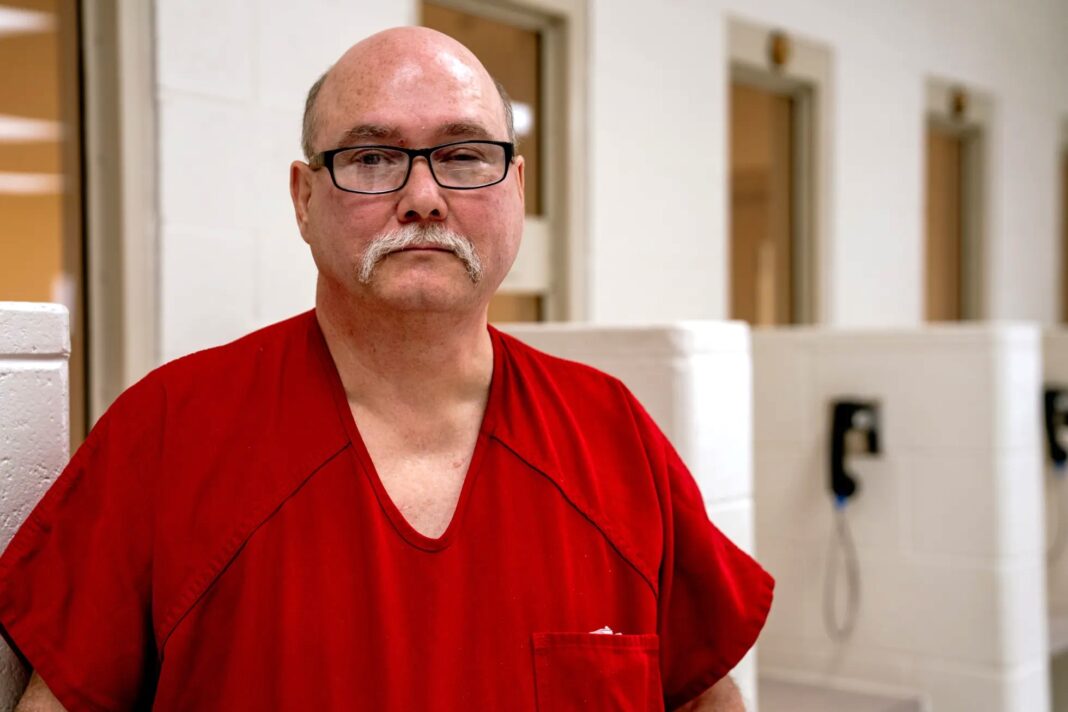
In 1984, a Montana court sentenced Bernard Pease to 110 years in prison for the murder of Maria Philbrick, a 23-year-old found dead in a Billings alley the previous year. The state’s case against Pease, whose family owned a nearby store, relied on since-debunked science such as microscopic hair analysis, which examines the color, thickness and texture of hair strands to find a match.
The practice has been discredited for years, with the FBI announcing in 2015 that 90 percent of its cases involving microscopic hair analysis were erroneous. This is just one reason the Montana Innocence Project stepped in seven years ago to help Pease gain justice. In early 2023, MTIP played a key role in winning his release from prison, after nearly four decades.
Now a Billings court is set to review the conviction and decide whether Pease deserves legal relief. The judge has requested findings and conclusions reports from MTIP and the state by Jan. 16. Boulder resident Brady Minow Smith, MTIP’s legal director, explained the key elements of the case, the focus of her work so far, and the possibility of Pease’s exoneration.
— David Lepeska
As detailed on MTIP’s website, the big discovery in Bernie Pease’s case is an independent lab’s finding that a key strand of hair was not only not Philbrick’s, but not even human. When was this discovery made and how was MTIP involved?
MTIP came on the case in 2019 and filed a petition requesting DNA testing of several items of evidence. The judge ordered DNA testing and found Bernie had no ability to pay so the State paid for the testing. The lab that does the testing has to be agreed upon by the parties or chosen by the district court, we used Bode labs who frequently does DNA testing for cases in Montana. The initial results that the hair was not human came back at the end of 2021. We requested mitotyping and in the beginning of 2022, we got the results that the hair was actually a cat hair. The fact that a cat hair could put someone in prison for nearly four decades shows us how problematic forensic evidence can be and highlights exactly why our work is so important.
You just joined MTIP as legal director last summer. How does it feel to now be making progress on your first big case? Is it as rewarding as you’d hoped? I also wonder if it’s difficult to maintain an even keel and avoid getting too optimistic.
It’s very exciting, although it’s strange to come into a case where other attorneys have done all the work. I can’t take credit for getting the case this far or the amazing work that other attorneys have done, but I feel grateful that I get to be involved to take it over the finish line. I’ve gotten to know Bernie and he’s such an amazing person, it’s hard to imagine an outcome that isn’t favorable to him. I believe fiercely in his innocence, and the optimist in me is definitely having a hard time managing my expectations.
MTIP must submit its findings and conclusions to the court by this Friday. I’m guessing you’ve played a lead role in shaping and crafting that report. Has that work gone smoothly, and are you nearly ready to submit MTIP’s filing?
I would say there is a challenge to coming onto a case at the very end. I had to get up to speed on everything that happened before, from the filings to the evidentiary hearing to the arguments by both sides. Luckily, I have a great team to help me and one of the original attorneys who has been helping with the filing. We are getting close to a finished product, but I’m still working on it. There’s a lot of pressure when you have an innocent man’s freedom in your hands.
The filings by MTIP and the state are expected to guide the judge’s decision on whether Bernie gets relief and/or exoneration. How long do you expect the judge to take to reach his decision, and what do you see as the most crucial pieces of evidence in the case, particularly in favor of Bernie?
It’s hard to say how long it will take, since there are no actual time limits in this type of work. When the judge issued the order requesting that the parties file our findings of fact, conclusions of law, he gave us a little less than a month to get them filed. That makes me think the case is on the top of his list and hopeful there will be a short turn-around. He could either just issue an opinion or bring us in for a hearing, so I expect it will at the very least take a month or two before we know anything.
The most crucial piece of the evidence is the hair, now found to be a cat hair. There were a lot of problems with the State’s evidence at trial, but when you have the State crime director testifying that a hair looks like the victim’s hair and it turns out to be a cat hair, how can you trust anything else they said?