
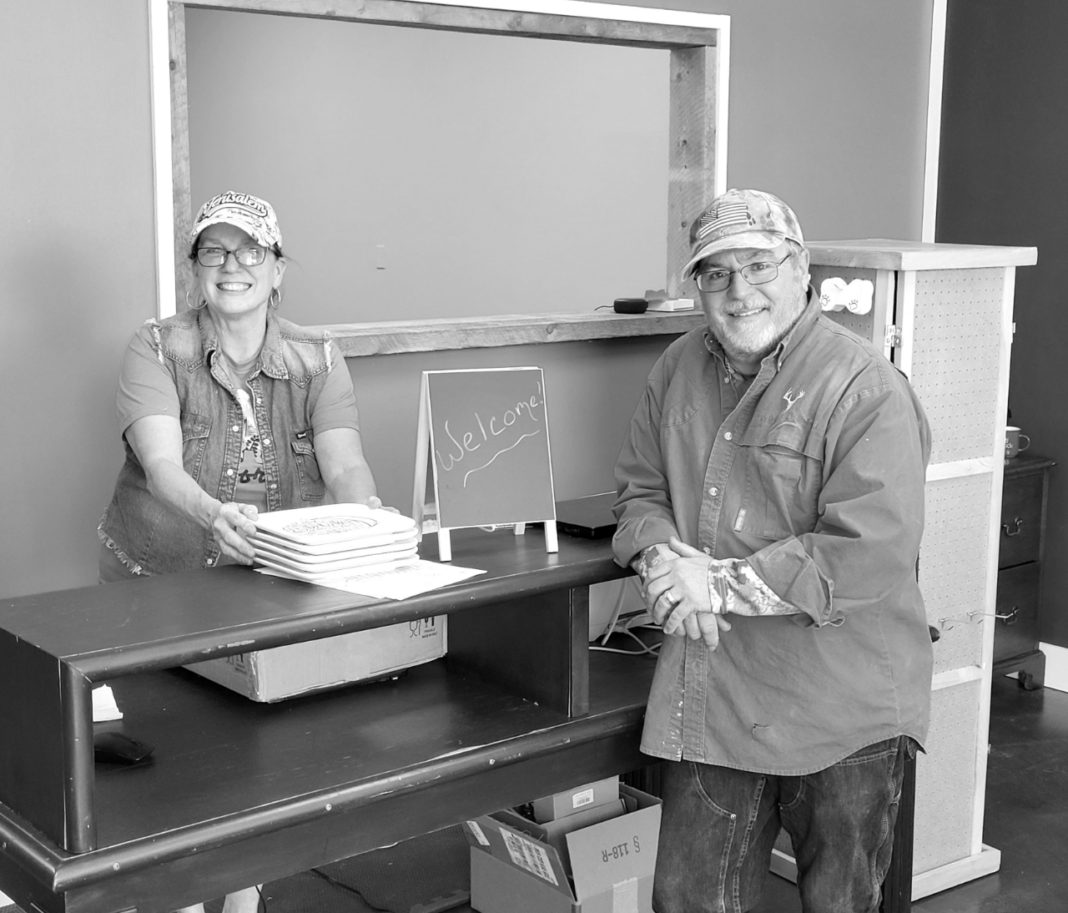
So, Stu Goodner died last month; an obituary appeared in last week’s Monitor. His departure was sudden and startling: Doctors discovered an aggressive brain tumor in late March, and Stu had a brief time in Kansas City with his family before passing peacefully at the age of 64.
This was, of course, calamitous for those who loved Stu. But it also marked a major loss for Boulder and Jefferson County. Stu and his wife Lisa came here in 2020. What they did in the five years since was remarkable, and I’d like to try to explain why, what we can learn from their example — and how we might respond to his death.
Stu teemed with ideas. Schemes for fixing up the church, getting more people involved in GOP politics, bringing family-friendly activities to Main Street. “I always joked,” Lisa told me recently, “that being in his mind would be a scary place, because it was constantly in motion.”
But unlike many of us, Stu actually put his ideas into action. Until his cancer was discovered, he was a deacon at Boulder’s Life Church; vice president of the Jefferson Local Development Corporation (JLDC); board member of Jeffco Foodshare, our local food bank; and chair of the Jefferson County Republican Central Committee.
Wherever he went, Lisa was his co-conspirator. At Life Church, they bought a sound system and picnic tables. They reenergized and expanded the county Republicans’ annual Fall Harvest Festival. At the JLDC, Stu, a longtime finance executive, became President Keith Foley’s key advisor as the group re-vamped its board and strategy.
“He came in and his persona — his spirit, the way his candle was lit, I thought he was much younger,” said Foley. “He had that drive and spirit that you wanted to be around.”
In 2023, the Goodners bought a block of buildings on Boulder’s Main Street that had been owned by Mayor Rusty Giulio. Lisa worried that Stu’s ambition was larger than their wallets: The structures were a bit creaky — most had been semi-vacant for some time — and needed a roof. But Stu envisioned great things: A Mexican restaurant in the old pizza joint; barbecue and a dance hall in a former auto shop; and electric vehicle charging stations out front.
When most people arrive in a new place, they hang back at first, getting the lay of the land and figuring out where they might fit in. But impatience was in Stu’s DNA: His grandparents had been Baptist missionaries, with his mother cast in the same mold. In Boulder, Stu discovered a mission of his own.
“We consider ourselves community investors,” he told The Monitor at the time. “We really want to make [Boulder] a place people want to come to. There just needs to be some things for people to do.”
So it was: Stu saw needs and was driven, as entrepreneurs are, to fill them. He seemed incapable of saying no – driven by generosity, impatience, and a sense of the greater good. Duane Weinmeister told me that Stu and Lisa acted as they did “to honor God. That was the base motivation. They wanted to see good happen in the lives of people around them.”
Weinmeister is the pastor at Life Church, so his bias is to see God’s hand in everything. But this is what everyone says about Stu and Lisa. “Everything they did was not for themselves, it was to better the community around them,” said Dan Johnson, another member of the Republican Central Committee.
Anchored in their Christian faith, and in Stu’s insanely restless spirit, they wanted to make things better. It was that simple.
Now, as Weinmeister gently observed, “we all make mistakes, and Stu bumped into a few things.” He had a forceful personality, he could be a pain, and not everyone took to him. “The people who didn’t like him,” Lisa noted, “sincerely didn’t.”
But he also understood how to work across the aisle. Stu’s politics and mine were mostly on different planets, and we sometimes sparred over his letters to the editor. But he was a savvy observer of the news — he studied journalism before his dad convinced him it was not a career that paid the bills — and he appreciated the critical role local papers play in civic life. He once suggested that I write a piece comparing the fact-based approach of community newsrooms like The Monitor to the many faux-news outlets, typically funded by political interests on the right, that have emerged in Montana. (And one day, I will.)
Which is to suggest that, strong will and all, Stu found ways to engage and connect. “He had it figured out,” Foley said. “He really focused on strengthening relationships in the community. He built on that. And people connected with him.”
Stu and Lisa left Boulder in early April. They sold their businesses, the Stitch and Stone art workshop and Bull Mountain Soda Fountain, to Amber Giulio, another restless entrepreneur; a deal to sell the buildings is in the works.
Other ideas were left swirling in Stu’s brain: He had been talking with Rose Perna, Boulder’s city clerk, about creating a technical apprenticeship program for Boulder’s teens. And he had picked out a spot in town to host a retreat for parents who have lost children, as he and Lisa had (Lisa hopes to complete the book the couple had been writing on the subject).
My hope is that the spirit of selfless changemaking Stu embodied won’t leave with him, that his legacy will be a Boulder where more people find common ground in the imagining and building of a stronger city, a place that embraces and thrives on its relentless flow of ideas. A community where we look for the good in each other, and constantly work to lift each other up.
Goodner’s daughter Hannah has created a GoFundMe campaign to help the family with medical and post-life costs:https://gofund.me/246e9a4b.