

Our lives can change in an instant. One minute we’re going about our day, doing our best to raise good children and carve out a career, when an alternate path appears. One simple choice and we end up lost in a dark world.
Raylynn Van Oort was eating with her young daughter at a Helena McDonald’s in late 1987 when a charismatic minister strolled in with a small, well-dressed entourage. They locked eyes and the new arrival sat down next to the 31-year-old mother, introduced his wife, discovered that he was Van Oort’s cousin by marriage and suggested she might run his gubernatorial campaign.
Van Oort had lost her father to a car crash at two years old and his replacement, her stepfather Jeff, had been an unyielding drill sergeant who eviscerated her self-worth to the point that she got straight A’s out of fear before becoming promiscuous (“‘Don’t say no’ was deeply embedded in my brain, held me prisoner,” she writes). She married and soon divorced a cold man who left her with a lovely daughter to raise on her own while struggling to launch an events business.
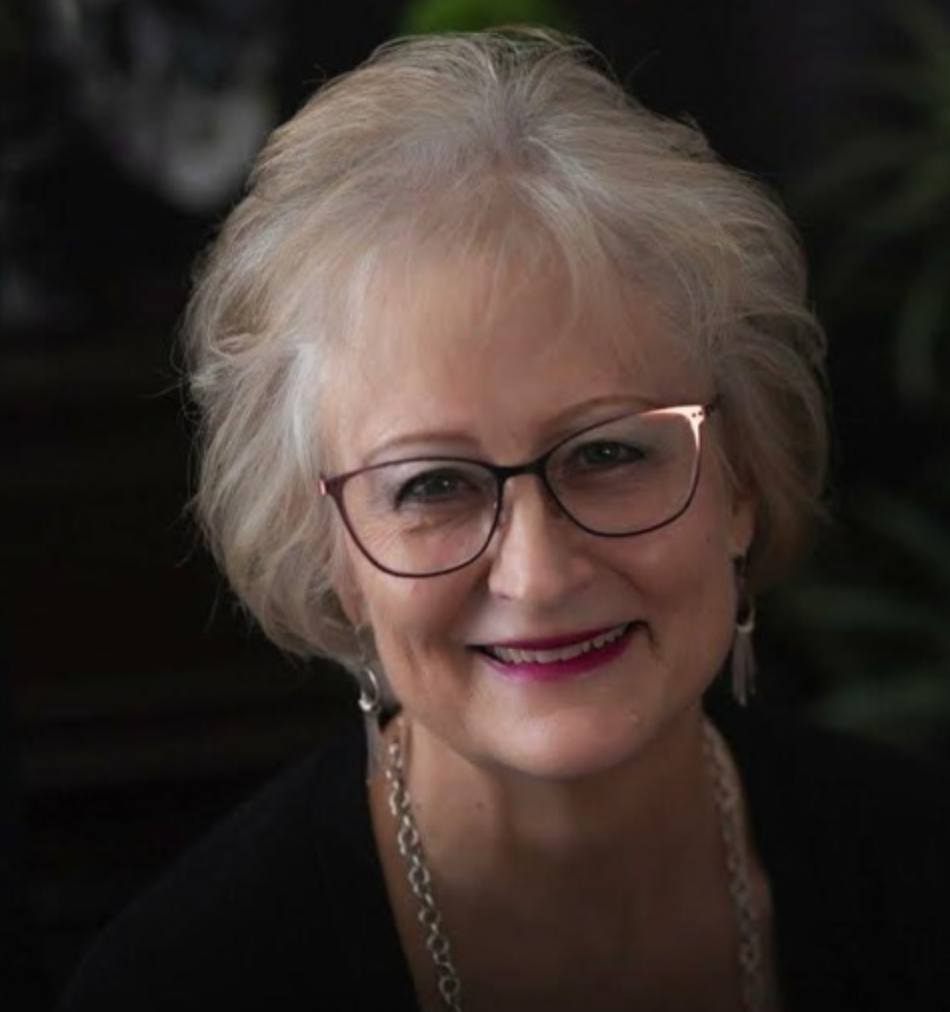
But all that was behind her at that McDonald’s, where Van Oort did her best to keep calm. More than anything, she wanted to believe it was her time, believe in this job, this campaign, but most of all in this man. “He’s all dressed up and he’s running for governor, so that gave him credibility,” Whitehall-raised Van Oort, whose heart-pounding new memoir, From Sh*t to Sunshine, hit bookstores this month, said in a recent interview with The Monitor.
At the time of that meeting, she had no campaign experience, but thought it couldn’t be too hard. “That’s how I was raised: when you’re on a ranch you don’t always have all the tools you need, but you figure it out,” she said. “I wanted that validation. I wanted people to see I could do it.”
Van Oort accepted the campaign manager job and moved with 8-year-old Sunny to Billings, where upstart evangelist Emmett “Curly” Thornton had turned a former sorority house into offices and residences for his ministry. “Moving there was very unsettling,” said Van Oort, who had to sell most of her things, yet saw it as the right path. “I felt God was directing me.”
So began a dozen years of fear, fraud, pain, imprisonment, and abuse, stealing the prime of her life and poisoning her relations with loved ones, as detailed in the book. Even after Thornton’s 1999 death, Van Oort would need a decade and a half to find her way back to joy.
Emerging as a minor Montana celebrity, Curly came in a distant sixth in the Democratic Primary for the 1988 governor’s race and followed that up with failed runs for U.S. senator and president. But he was never a politician. His passion was evangelism, or to be precise, convincing willing minds to do his bidding. Named the ministry’s executive director in the early 1990s, Van Oort learned that her boss demanded total loyalty and full obedience to his vision of paradise on earth.
When Curly recommended a husband, a fellow ministry member named Wally, she blamed herself for not being attracted to her betrothed. Their wedding, which Raylynn’s mother and sister Brenda were allowed to attend, would be one of her last hopeful moments from this period. Thornton soon tumbled into a spiritual rabbit hole, taking the most extreme religious positions and harshly disciplining ministry members who stepped out of line.
Van Oort was there, at a Motel 6 in Miles City in early 1996, when he returned from a meeting with his father claiming to be Jesus Christ, the son of God. “The intensity of the spirit when he walked in was unbelievable,” she said, describing him as inflamed. “The fear we felt, I can’t even describe it. We were literally flattened against the wall. It was like no fear I ever felt.”
Unsatisfied with her willingness to hear his message, Thornton punched Van Oort in the jaw that night, giving her whiplash and blurring her vision. He bashed her face again on at least two other occasions. “We were often objects of disappointment,” she said. “We were all being trained for the army of God through the rod of man.”
Thornton began dispatching his minions to use deceit to acquire prescription drugs for him from area hospitals and clinics. Despite barring ministry members from drugs and alcohol, he began taking copious amounts of drugs and drinking often, claiming that he was atoning for the sins of addicts. The worst was yet to come. In the book, Van Oort barely mentions what she calls her “purity poke”: one day on the road, Curly raped her in a hotel.
“That’s one of the things that still triggers me,” she said, growing quiet. “One day, it was just, ‘We are going to do this.’ It was all about needing to be cleansed.”
Though feeling violated, Van Oort never considered leaving because of Thornton’s frequent threats to send her and her family to hell. She acknowledged that other women in the ministry faced the same treatment. Multiple reports suggest Thornton and other cult members sexually abused minors. Sisters Jessica Anderson and Catie Reay, the latter of whom may be Thornton’s daughter, have said they were abused until age 10, when their ministry-member parents left Billings. Convicted of incest, their father served time in Montana State Prison. (Van Oort’s daughter Sunny may have experienced similar abuse, as she detailed in a 2013 episode of the talk show Dr. Phil. Van Oort declined to talk about that sensitive subject.)
The low point for Van Oort may have been when police raided her hotel in August 1996 and arrested her for writing fraudulent checks for Thornton, who was nowhere to be found. She spent more than a year in prison and upon release was picked up by her ministry husband Wally.
Despite becoming a convicted felon under his guidance, Van Oort still believed in Thornton and remained part of a cult with as many as 100 members.
Some 15 months later, in early 1999, Thornton was found dead in a southern Illinois hotel room with no signs of foul play. But still fearing punishment in the after-life, Van Oort would remain under his spell for another decade and a half. She slowly reconnected with her daughter and family, but tensions remained.
“They were whispering behind my back, ‘Why does she still believe in him??’” said Van Oort. “That made me feel misunderstood.”
One day at church she met a kind widower named Darryl and began to find a better path. They married in 2009 and the next year, when Sunny told her how a former ministry member had escaped the ministry, Van Oort came to the stunning realization that she had been in a cult.
She started seeing a therapist and sharing her suffering with her husband and family. But the Lord had one more trial. Van Oort had long struggled with over-eating and bulimia, and the pain of acknowledging her trauma drove her back to food. At nearly 300 pounds by 2015, Van Oort began passing out. Doctors gave her an oxygen tank she lugged around everywhere.
She underwent lung biopsies, visited the National Jewish Hospital and even the Mayo Clinic, but nobody could pinpoint the cause. Then, a ray of light. Sunny, who had recently become a health coach, called her mother proposing a new diet. After initially refusing, Raylynn agreed. When the advisor from Optivia, the weight loss company Sunny worked for, kept asking Van Oort why she wanted to lose weight and live a healthier life, a lightbulb went off.
“If you’re an alcoholic, it’s not about the drink, it’s about what’s causing you to drink. It’s the same with food,” Raylynn explained. “So when I would go to grab something, I thought to myself, do I want my grandkids to remember me sitting here with this stupid oxygen hose or going snorkeling with them in Hawaii? That’s what kept driving me.”
She lost 130 pounds in less than a year, and she and Darryl soon took the grandkids to Hawaii. “We went snorkeling and did all these fun things,” she recalled. “That was my reward for being able to have that relationship with the kids. It was beautiful.”
Today, Raylynn remains happily married to Darryl and has helped dozens of people overcome eating issues, working as a health coach like her daughter. Through the book and related website, asprigofhope.com, she also works to give hope to those who have experienced trauma and abuse and controlling relationships.
“We can sit in victimhood, and if that’s how you want to feel for the rest of your life then stay where you’re at,” she said. “But If you want to have hope and joy then choose to uncover the pain of the past…Is it easy? No. It takes unbelievable courage. But the joy of life, and the love you can give and receive, are worth it.”
Van Oort smiled and laughed throughout the interview. In the book, even while detailing her endless trials, she comes off as a source of hope and goodness: helping a boy in a bike accident; counseling a fellow inmate considering suicide; giving inspirational books to a prison guard; uplifting the crowd with her singing at the 1985 Helena Jazz Festival.
“I don’t want my story to be about the cult. I want people to know me because of my laughter, my joy, my faith, my hope, my inspiration, my love,” she told The Monitor. “My trauma is huge. I’ve had so much. But I thank god for all of it. It’s made me who I am. It’s given me the ability to connect with people in so many ways.”