
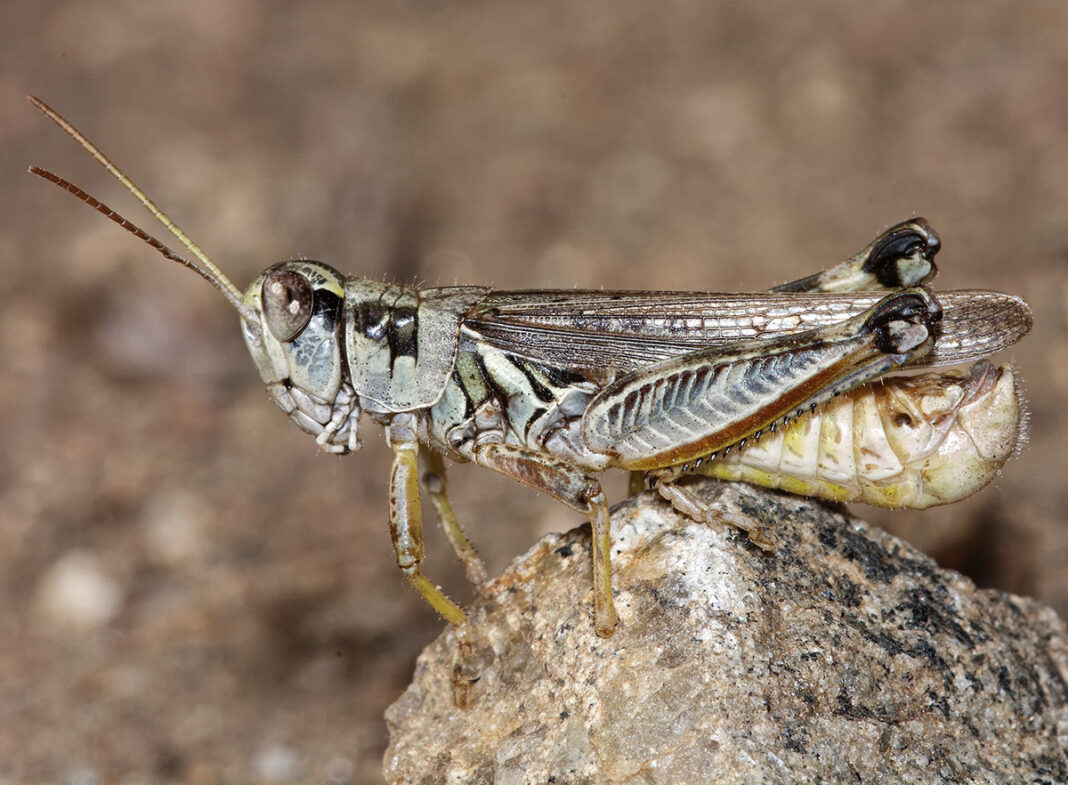
Rancher Steve Carey has noticed more of what he calls “hoppers” this year.
Over the summer, the insects had eaten portions of his hay crop down to the stems, concentrating on the green areas around the pivots, he said.
So much so, that Carey estimates he’s lost about 10% of his hay crop around the targeted parts of the irrigation pivot.
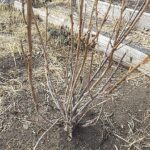
Susanne Shultz watched as grasshoppers devoured her garlic, onions and rhubarb, and stripped her asparagus and berry bushes.
“I’ve never had it this bad as this year,” said Shultz, who lives on the south side of Boulder Hill.
“I can’t even believe what they did,” she said.
Others may have noticed the abundance of grasshoppers while walking through the grass, as seemingly hundreds take flight as one passes by.
A series of weather events has led to more grasshoppers this year, according to Gary D. Adams, Montana State plant health director in the US Dept. of Agriculture’s Animal and Plant Health Inspections Services.
During most years, grasshoppers do not cause a problem, and are an integral part of the natural ecosystem, he said.
However, a cool, wet spring in 2019 led to an above average amount of vegetation, to include sweet clover, and it also delayed grasshopper hatches by a few weeks, he said.
For that reason, there was more for the grasshoppers to eat. The extra food was followed by an unusually mild winter, and along with hot, dry weather this year, led to a significant increase in the grasshopper population, said Adams.
And it’s not over, yet.
“A high population of grasshoppers is likely to last three years,” said Adams in an email.
Carey said the most annoying part of the “hopper” abundance this year was when he was riding a four wheeler without a windshield.
“They would constantly hit you in the face as you drove through them,” he said, adding that he’s thinking about using a mobile chicken coop next year to have the chickens thin them out.
Schultz said she has chickens, but they haven’t been able to keep up, as clouds of grasshoppers fly up as she walks the path to the garden.
“It was almost like a small storm. This is insane,” she said.
There are a few hundred different species of grasshoppers in Montana, but only about a dozen types occasionally reach a level where they are considered a pest, said Adams.
This year, the grasshopper population is comparable to that in the 1980s, when their numbers throughout the west were very high before dropping off for a period of time, said Adams.
While grasshoppers are a normal part of the rangeland environment, when they become too numerous, they can cause damage to agricultural resources, such as reducing the amount of forage for livestock.
This can cause producers to buy supplemental feed, find additional pasture and/or sell their livestock at reduced prices.
“Additionally, large rangeland grasshopper populations can move into and devastate cultivated crops like wheat, barley and hay. The reduction of hay impacts the ability of ranchers to feed their livestock,” said Adams.
At Carey’s ranch, the “hoppers” concentrated on the sainfoin hay, as well as some new seeded alfalfa.
“The sainfoin that was eaten was on the two outside sections (outside two rings of the pivot) as the hoppers moved into the field. The new alfalfa actually died out in spots on the outside edge from the hoppers eating it as it sprouted,” he said.
Shultz doesn’t know how much permanent damage the grasshoppers have done to her plants. All she knows is that her usually lush, green garden now looks rather desolate.
Schultz said the cold weather around Labor Day knocked them back a bit, but she won’t know the full extent of the damage until next year. “I keep watering, though,” she said.