
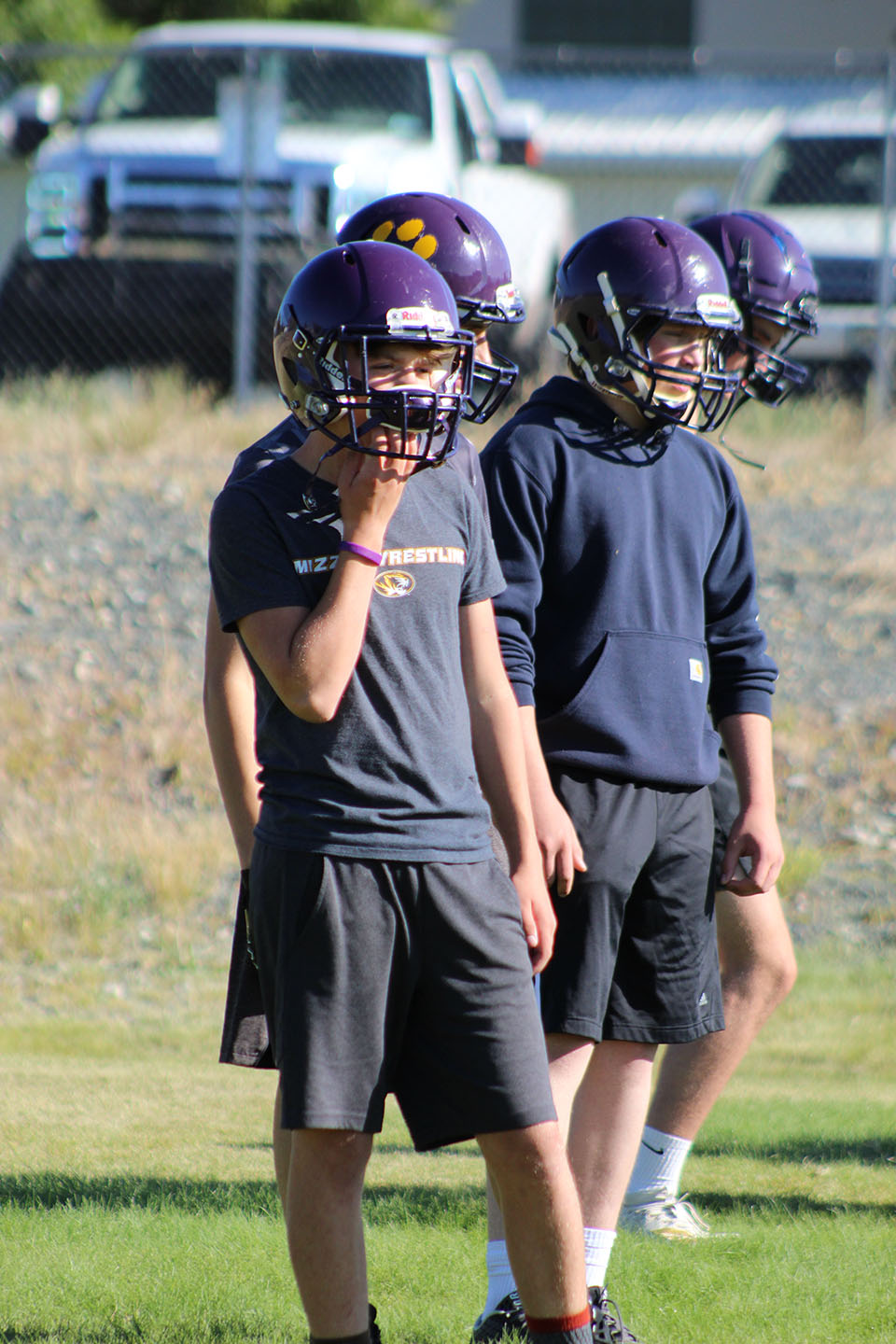
At 8 a.m. Friday, August 14, about 46 young men reported for the first official pre-season practice of the summer at Jefferson High School. Finally, amid swirling passions and conflicting decisions nationally regarding the feasibility of playing contact sports amid the COVID-19 pandemic, football season was on.
The boys’ parents were more than fine with that.
“I’m happy it’s moving forward,” said Mandy McMaster, whose son Trent, a junior, is expected to play wide receiver and cornerback for the Panthers. “I saw how no school in April and May affected my kids, and I think it’s healthy, mentally, for them to be back at it.”
It’s still not certain they will be. The Montana High School Association announced July 27 that it would support the return of fall sports across the state, freeing athletes to participate in interscholastic football, volleyball, soccer, cross country, and golf competition with safeguards and some modest restrictions.
Since then, however, the sports world has been shaken by the decisions of major collegiate associations to shut down football this year. The Pac-12 and Big Ten, two of the five “power” conferences, voted August 10 to defer play to next spring, citing “too much uncertainty, too much risk,” as one conference official put it. Likewise the Big Sky Conference, whose members include both the University of Montana and Montana State University.
At its August 13 executive board meeting, the MHSA stood pat. It amended its previous policy to require face coverings for all players, coaches, and officials (though not during play). And it approved allowing divisions and districts to cancel non-conference competition; the state’s Class AA football has since done so, and Jefferson High may yet be required to do the same. But for now, football, and other sports, will be played.
JHS parents appear to support that call. Five months after school closed in the early days the coronavirus outbreak, they’re eager for a return to some semblance of normalcy for their children. “The kids need it,” says Larry Rasch, a JHS trustee whose son Derek is a senior lineman. “Last spring, they had no contact with kids from school. The health risk [of playing football] is less of a concern to me than their mental well-being.”
Likewise, “I’m glad Rutger is able to play,” said Susanne Shultz, whose son is a senior on the team. “We’re glad for the opportunity and the camaraderie that comes with it. I don’t want my kids to run into danger, but I also want them to participate in life and not withdraw.”
Shultz and others approve of the measures that coaches and school officials are taking to maintain social distancing during practices. Players are expected to rotate through the weight room in small groups, and during the pre-season they’ll work out in “pods” with players of similar positions. The MHSA has mandated that equipment, including footballs themselves, be cleaned regularly, and that water bottles not be shared. (“That always bugged me before COVID,” Shultz remarked.)
JHS Athletic Director Dan Sturdevant said that coaches are meant to be sanitizing the blocking sleds and tackling dummies both before and after every practice – and more often if different groups of players are using the equipment. “We’re doing everything we possibly can to keep it going,” he said. “It’s a tremendous amount of extra work, but we’ll get through it.”
Parents say they appreciate the effort. “[The school has] built a lot of trust over the years,” said Jenny Genger. “You know they’re putting our students’ safety first and foremost.” Her son Jake, a junior linebacker and tight end, attended the Jenkins Elite Camp in Colorado, joining players from across the country. “There was nobody wearing masks,” Genger says, “and they weren’t sanitizing equipment. It’s been a month, and there’s not been one reported case – so having gone through that, we’re definitely feeling safe with what they have in place at Jefferson High.”
If anything, parents are concerned with a scheduling issue. Class B schools are sticking to non-conference play, and the Panthers’ first two opponents are Florence-Carlton High and Huntley Project, both of them from counties with higher reported COVID-19 case rates. “It’s silly that we’re having teams from hot-bed counties come to Jefferson,” said Eric Rykal, father of junior linebacker and offensive lineman Wade.
In fact, Sturdevant says that the school received a notice August 14 from Joan VanDuynhoven, the Jefferson County health officer, indicating that non-conference opponents would not be allowed to play in the county this fall. VanDuynhoven couldn’t be reached for confirmation.
That issue won’t diminish the excitement of Rykal and other parents – or, for some, their relief. Matt Riehl is a 6-foot, 4-inch, 220-pound lineman who doesn’t do well staying inside. “Trying to keep that kid in the house is impossible,” said his mother, Jamie. “If he’s not out there doing something, he goes nuts. His biggest thing is, he just wants to play.”
Come August 28, the Panthers and their parents will learn if, in fact, they can.