
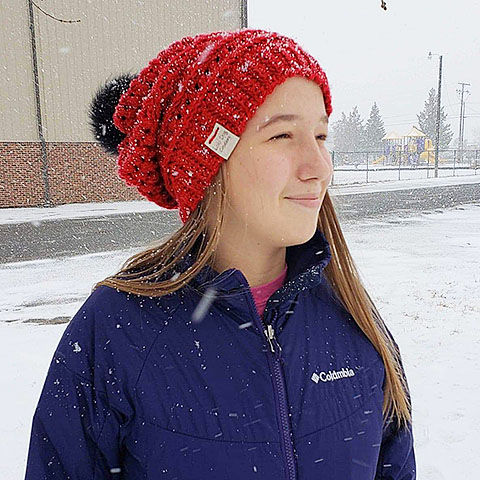
When Saraliba Auch’s chemistry teacher told her about a program that involved space, she seized the opportunity.
Auch applied, and was accepted into the Western Aerospace Scholars program administered through the University of Washington. The program offers a distance learning course that focuses on NASA and culminates in an opportunity to meet with NASA scientists, STEM (science, technology, engineering and math) professionals and educators and university students.
Despite COVID-19, Auch said that, so far, the in-person session is still on and will be held at Canyon Ferry in June.
The Jefferson High School sophomore said she’s always been interested in science and space exploration and has her sights set on a career in astrophysics. Auch figures this course, which can also continue in her junior year, will let her know if this is the right path to follow.
In order to meet the NASA scientists, Auch had to complete three modules of study, with each one taking about two weeks to complete and each more difficult than the last, she said.
To be accepted into the program, Auch wrote an essay introducing herself and became familiar with the Western Aerospace Scholars program rules as part of the first module.
“This was the easiest module,” she said.
The second module focused on the history of NASA and the third on moon exploration, to include designing a moon-based station, said Auch.
Each module had a reading and math component. For example, during the Focus on NASA module, Auch had to calculate when astronauts begin to be affected by gravity — or the lack thereof. Auch researched how that works on the International Space Station to help with that particular problem. The NASA module also included a lab, essay and quiz.
Designing the moon-based station was probably the most intense, said Auch.
It too included math — such as calculating the amount of water in the Moon’s southern craters — as well as readings on previous moon missions — and then a lab where Auch had to design and build a Moon base. The module culminated in a 3,000 word essay.
That portion took the longest to complete, said Auch.
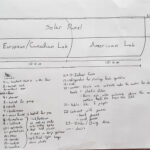
There were other problems to work through too, such as where the station would be located and how would it deal with the dust, she said. The station had to be drawn to scale with a simulation of one room.
One of the areas of her moon station included labs for the scientists from four different global areas who would inhabit the space — the United States, the European Union and Canada, Japan and Russia.
Auch said she based this configuration off the International Space Station. The idea is that no one country owns the moon, she said.
The course work began on Feb. 27 and ended on April 1. In addition to completing the modules, Auch also had to do her regular schoolwork as well as hold down a part-time job.
It took good time management, she said, adding that the school shutdown, due to COVID-19, also allowed her to fit in the additional work.