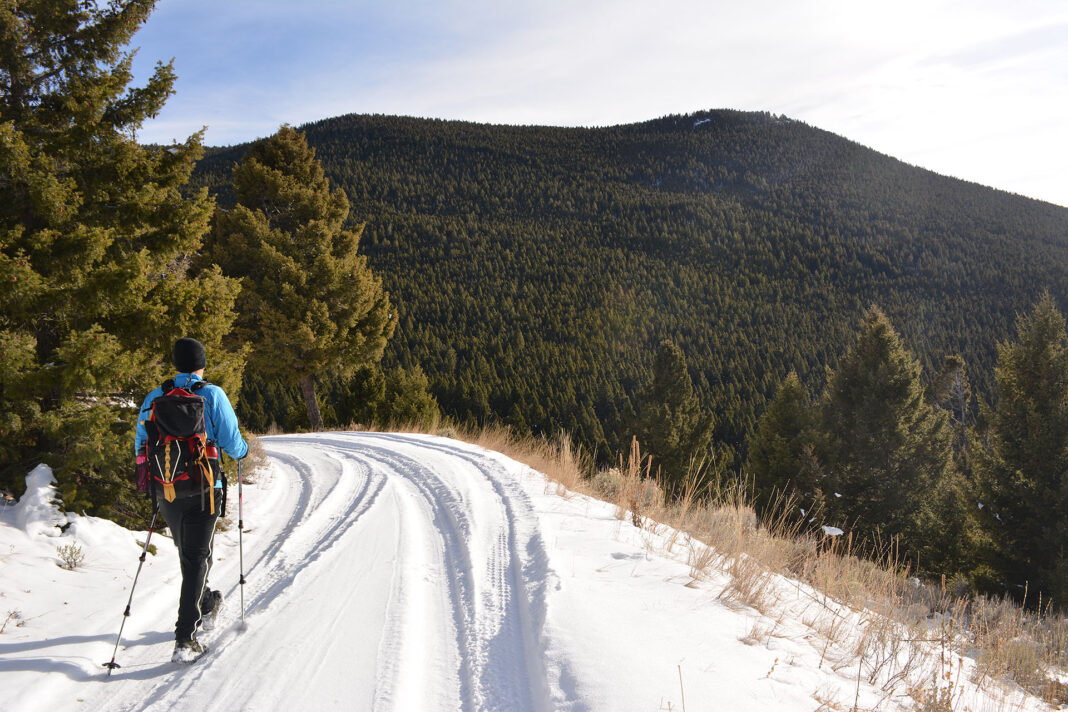
At the head of a narrow gorge draining the Elkhorn Mountains, the historic town of Elkhorn settles into its ragged mound of mines. Though the weathered camp shoulders tarnish, winter roads trace haul grades that shuttled loads of ore and salt, miners and woodcutters, by rail or wheel or beast, through the gulches and glades of the country’s once most productive silver mining camp. A foray by ski or snowshoe reveals the anthill of the Elkhorn district overcome by forest, its chambers and transport tracks still traceable under snow.
Heyday passage into Elkhorn was born in part of a bitter rivalry between the Northern Pacific and Montana Central Railroads in their mad bid to tap Butte’s flourishing copper deposits. When Montana Central won the race west through the Boulder Valley from Helena in 1888, the NPR abandoned its track before reaching Bernice. Swallowing financial loss, the NPR swiveled to Boulder to broach the booming Elkhorn camp in need of reliable transportation. The first train from Boulder arrived in Elkhorn in 1890 as the district’s principal producer, the Elkhorn Mine, was peaking.
Though today’s Elkhorn Road probes winter backcountry, Jefferson County maintains the 8-mile stretch through Montana’s smallest state park year-round, where preserved frontier facades head up a private strip of historic structures still home to permanent residents.