


Editor’s note: This is the first in a series of stories about mental health and suicide among farmers and ranchers. This story discusses suicidal thoughts, suicide and those grappling with its aftermath. If you or someone you know are having thoughts of suicide, help is available from the National Suicide Prevention Lifeline at 1 (800) 273-8255 and https://suicidepreventionlifeline.org/chat/.
Darla Tyler-McSherry’s father, Dick Tyler, was a farmer in Lonesome Prairie, Montana. He was born on the farm in 1934, and he killed himself on the farm in 2016.
Tyler-McSherry said that one morning when she was in high school, her father was up “a little too early” harvesting barley. Dick Tyler kept a truck out in the field so that he could load it and continue working after his combine tank was full. He parked the combine, and was unloading the barley into the truck, but it was sticking to the tank.
“So as my dad do, he hops up into the tank and he starts kicking the barley to get it to auger off better,” she said.
While kicking the barley, Tyler momentarily caught his foot in the combine’s corkscrewing auger, she said. He was able to pull out his mangled foot, climb up out of the tank, get back in the cab, slam the gear and continue working. At first, he tried to ignore it. Tyler told his family later that he tolerated the pain for a couple hours, looking down from time to time to glimpse the blood pouring out of his foot, but then he looked away and kept going.
Finally, Tyler-McSherry said, her father had had enough. He came into the house, where she was sitting at the dining table with her mom.
“My dad said to my mom, ‘I’m hurt. I need help.'” Tyler-McSherry said. He had tried to ignore his pain for a long time, she said, but it eventually became too much and he had to ask for help.
She fell silent for a moment before continuing. She wished her father had always been able to ask for help.
“Thirty years later when my dad was struggling with mental health issues, and he was thinking that the only way out was to take his own life, he didn’t have that language inside him.” she said. “You want to go back in time, and you want to just say to that person so badly, ‘it’s OK, we’re here for you. I’m not going to abandon you.'”
Many farmers and ranchers have stories like Tyler-McSherry’s. The Centers for Disease Control and Prevention released a report in 2016 that showed that agricultural producers experience higher suicide rates than any other occupation. Tyler-McSherry said it is clear that suicide rates among agricultural workers are disproportionately high.
Michelle Grocke, an assistant professor at Montana State University and a health and wellness extension specialist for the university, started working with the MSU Extension program two years ago, after completing a doctorate in medical anthropology at MSU in 2016. The first thing she did as an extension agent was travel around the state and ask other extension agents what their most pressing concerns were, she said. Ninety-nine percent of the time, she said, the answer she received was “stress,” particularly in the farming and ranching communities.
Grocke said that short-term bursts of stress can be healthy, but long-term stress—where you can’t calm yourself down can—cause severe medical and mental health issues, and the stress then “trickles out” and makes it difficult to have healthy relationships.
Society doesn’t make it easy for people, especially men, to come forward with these issues, she said, and we all pay a “heavy price” as a result.
Tyler-McSherry has worked in health promotion and wellness for her whole career—but for some reason had tunnel vision when it came to the people closest to her, because she thought she would naturally know if they weren’t OK. She currently works as the director of student health services at Montana State University Billings, and she has a master’s degree in health and human performance from the University of Montana.
To try to make a difference, Tyler-McSherry founded Ask in Earnest, a group that works to raise awareness about suicide in rural populations. She said she did not know that suicide in rural areas was an issue “until it hit home.”
She said the nonprofit also works to educate people about mental health and self care—for example, the importance of good sleep hygiene, nutrition and healthy stress coping mechanisms for managing mental health issues.
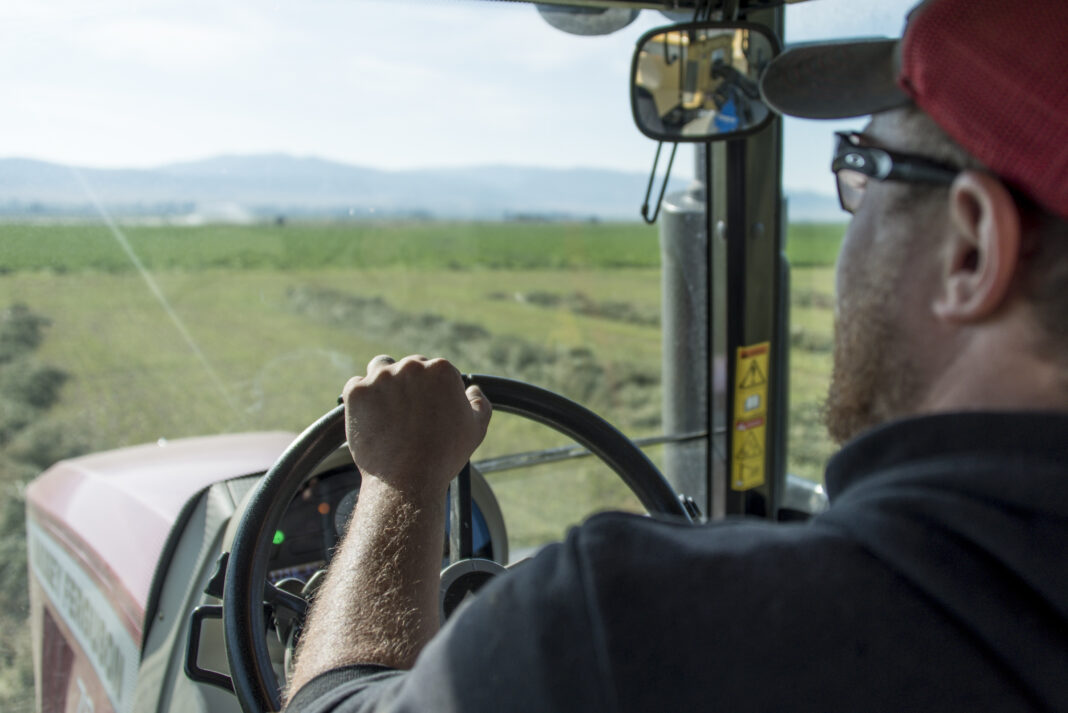
Agricultural workers are used to figuring out problems on their own, and making their own decisions without consulting others, Tyler-McSherry said. They are used to working long hours without rest, continuing on if they are ill or injured, often tolerating adverse weather, significant adversity and pain, she said.
“All those things combined make them successful for their occupation, but it doesn’t lend itself well when they have mental health problems and start feeling depressed, and in severe situations start feeling suicidal,” she said.
Jefferson County rancher Steve Carey echoed that sentiment, saying that, in agriculture, many have the mentality that they “just gotta be tough, and you never cry.” He said this mentality is especially dominant in older generations of farmers and ranchers. Personally, he said, even when he’s feeling stressed, he needs to be able to keep working. He said he doesn’t want to talk about it with others because he wants to keep his mind off of his stress.
“It’s so ingrained into ranchers and farmers to suck it up, be tough, don’t whine or complain. We really need to challenge those [things], because there’s people suffering in silence,” Tyler-McSherry said.
According to Tyler-McSherry, a reluctance to ask for help or admit to feeling psychological pain is one of many reasons agricultural workers are at risk.
Another, she said, is the imbalance between work and personal life. A rancher can look out the window of their home and always see that there is more work to be done, she said.
“You just live what you do,” she said. “Ranchers and farmers don’t get to have that physical and psychological separation between work and home.”
She said it is often difficult for those who work “urban-style” jobs to understand, but she tells them to imagine having a bad day at work, and then at the end of the day not being able to escape that stressful setting.
Tyler-McSherry’s father worked on the farm until he was 82, but the summer before he took his own life, he stopped working due to health issues.
“I’m sure he thought to himself, ‘if I can’t be out there farming, what the hell good am I?,” and worried he was becoming a burden,” she said. “We need to teach those farmers and ranchers, if you never harvest another bushel of wheat your whole life, or if you never do another branding, it doesn’t mean you’ve lost any value.”
Being a producer can be quite isolating, she said, often devoid of connection with other people. She said that the general public likely has a “greater appreciation” for isolation after the pandemic, where many were unable to interact with others.
“We don’t really go to town much, there’s no social life except for with other ranchers.” Carey said, agreeing that the workload can make ranching a lonely profession. “We’re by ourselves most of the time.”
Carey said he has worked on his family ranch since he was a kid, and is a fifth-generation rancher. He lit up when asked what he liked about his job. He answered right away:
“It’s not the same every day, like a regular 9-to-5.”
He hesitated slightly when asked what the hardest part of being a rancher is.
“It’s definitely all the stress that comes with it.”
He said it is especially difficult that many of his stressors involved things he could not control, noting that this year has been especially bad.
“Right off the bat,” he said, a major source of stress is ongoing uncertainty over whether he’ll continue to have access to some of his family’s grazing allotments on U.S. Forest Service land. Increased recreations has an impact, too, as does wildfire. He said that when people camp incorrectly or drive motorized vehicles off-trail in the forest, it ruins the grass and turns it into “just dirt,” making it harder for his animals to graze.
“Throw that on with the beetle kill, and we got the fire danger now. The second you get fires in there, your cows have no grass. You’re out,” he said.
If that happens and there is a fire affecting his allotments, Carey said, he would “have to come up with a plan at the time.”
With the drought, he said that he is also mindful of his ranch’s water rights. Before, the river would be a great water source, but in July, he said, he was seeing August levels of water. He added that the fertilizer did not arrive for many ranchers this year because of shortages in Texas.
“That slows down your hay production, and now hay is at 400 bucks a ton,” he said. He added that fuel has almost doubled in price this year, so buying hay elsewhere is often cost-prohibitive.
Tyler-McSherry said that this dynamic is another risk factor for agricultural workers—their livelihoods are dependent on factors they cannot control: weather, market prices, and wildfires that might destroy crops and the pasture lands.
Kaleena Miller, an MSU agriculture and natural resource extension agent for Jefferson and Madison counties, said that this year has been especially difficult for farmers and ranchers because of drought and fire. She said that many are facing “difficult decisions” about the future of their businesses.
Additionally, danger and injury lurk everywhere, which adds to the stress. Carey said that while working last year, he flipped a four-wheeler on top of him while going downhill.
“It was enough to make me go, ‘hmm, maybe I should go to the hospital,” he said. He was hospitalized in an intensive care unit for two days with a lacerated liver.
This winter, he fell on a piece of equipment and broke several ribs, he said. He and his wife both also got “plowed over” twice this year by cattle, he said. His wife’s “nerves were on edge,” but she was fine, he said. With the pine beetle kill, Carey said, he always has to be watchful of falling trees. He said he has had some close calls.
Every piece of equipment that he uses has a warning label, telling him how he can get “wrapped up” or “shredded,” he said. Being surrounded by that danger all the time, he said, can also cause stress, especially when you’ve been injured in the past. Many ranchers have back and knee injuries, he said, but they just view it as a way of life, and the stress just comes with it and is not avoidable.
He said he has experienced long-term mental health effects from these traumatic injuries.
“I’m willing to say I’ve dealt with depression and suicidal thoughts,” Carey said. In his view, the biggest cause of rancher suicide is people just “getting tired of the pain—the emotional pain or the physical pain.”
Being an EMT, he said he noticed the signs the first time he experienced post-traumatic stress.
When he was 25 or 26, while his parents were on a cruise in Alaska, his cattle got lead poisoning from an old dump. He witnessed his cows “flop sideway and just shake,” left and right having seizures. He didn’t know what to do or what was happening, but he called the veterinarian who helped him, he said. Since then, he said, he can’t do seizure calls when he works the Boulder ambulance as a volunteer EMT.
“We’re exposed to a heck of a lot more than normal people are,” Carey said.
He once did CPR on a calf and brought her back to life, he said. He bottle-fed her for a week, but with the brain damager she had endured, she still couldn’t stand up. He had to have his dad euthanize the calf, because he couldn’t do it himself after he had just nursed her back to life, he said.
“You have to have a heart to raise them, but at the same time you’ve gotta be heartless,” he said.
Mike Rosmann, an Iowa farmer with a doctorate in clinical psychology, has raised animals all his life. He’s also one of the nation’s leading psychologists in agricultural behavioral health and he teaches at the University of Iowa. He said that ranchers rely on their animals for their livelihood the same way the animals rely on them. He said there is a special “relationship that is formed.”
He said a good example of this connection was producers’ plight during outbreaks of mad cow disease and foot-and-mouth disease in the U.K. in the early 2000s. During this time, he said, sheep and cattle were rounded up to be euthanized and incinerated. Suicide rates among agricultural workers increased tenfold, Rosmann said.
Tyler-McSherry said that access to lethal means is another factor that contributes to elevated suicide rates among agricultural workers, though she added that this had “nothing to do with gun control.” She pointed to a study of individuals who survived their suicide attempts that showed that 75% of these individuals attempted suicide less than an hour after making the decision to end their own lives. Because it often happens so fast, quick access to lethal means makes it more likely that individuals will attempt suicide, she said. If there’s more time after the onset of suicidal thoughts, it is more likely someone will be able to intervene, she said.
“Here in Montana, two out of three people who die from suicide used a firearm,” she said, adding that this does not mean that individuals should not have guns, but rather if someone believes that a gun owner is suicidal, it is safer to “babysit” their guns or ammunition, and then return it to them once they’re no longer at risk.
Carey argued that the issue of suicide among agricultural workers has nothing to do with access to firearms. With or without guns, he said, if someone really wants to end their life, they’ll find a way.
Grocke, the assistant professor and health and wellness extension specialist, said that most people choose to leave other jobs that come with a similar level of stress as agriculture. Farmers and ranchers often don’t see that as an option because their jobs mean so much to them, he said.
“If you’re struggling financially and might be at risk of losing the farm, you’re letting down your dad, your grandfather, your great-grandfather,” Tyler-McSherry said.
For agricultural workers, their occupation is much of their identity, Tyler-McSherry said.
“Ranching isn’t a job, it’s a lifestyle,” Carey said, noting that he said he has two generations looking over him. “When you fail at a city job, you find another job. When you fail a ranch, there’s no second chance a lot of times, and you feel you’ve let down your family. Being so family oriented is a gift and a curse.”