
Red-naped Sapsuckers, a medium-sized woodpecker, have killed a couple of thousands of dollars’ worth of our trees over the past 24 years. Over that time, we’ve learned a few things.
Red-naped Sapsuckers are famous for girdling certain types of trees such as Aspen, Birch, Canada Red Chokecherry and several others. The tree will completely die above a seriously girdled part of the trunk or branch.
One way to help protect trees from Sapsucker damage is to allow lower branches to grow down close to the ground, or to let several suckers grow up from around the base of the tree. If it’s a tree that doesn’t produce suckers, plant a shrub or two very close to the base of the tree. Sapsuckers will not usually enter the thick branching or foliage of the shrubs to get to the trunk of the tree.
The birds also do not usually enter the upper thicker branching areas of a tree to get to the trunk. The theory is that if they enter thicker branching areas they cannot see or get away from a predator fast enough to protect themselves.
Still, there’s no way to completely stop the Sapsucker from doing its thing. But here’s our key insight: If we immediately protect a damaged tree, the birds simply go to another one and start pecking on it. If we allow them to just have that one tree, they rarely go to another one. So, we simply sacrifice that one tree and let them have it. It’s what I call our “sacrificial” tree.
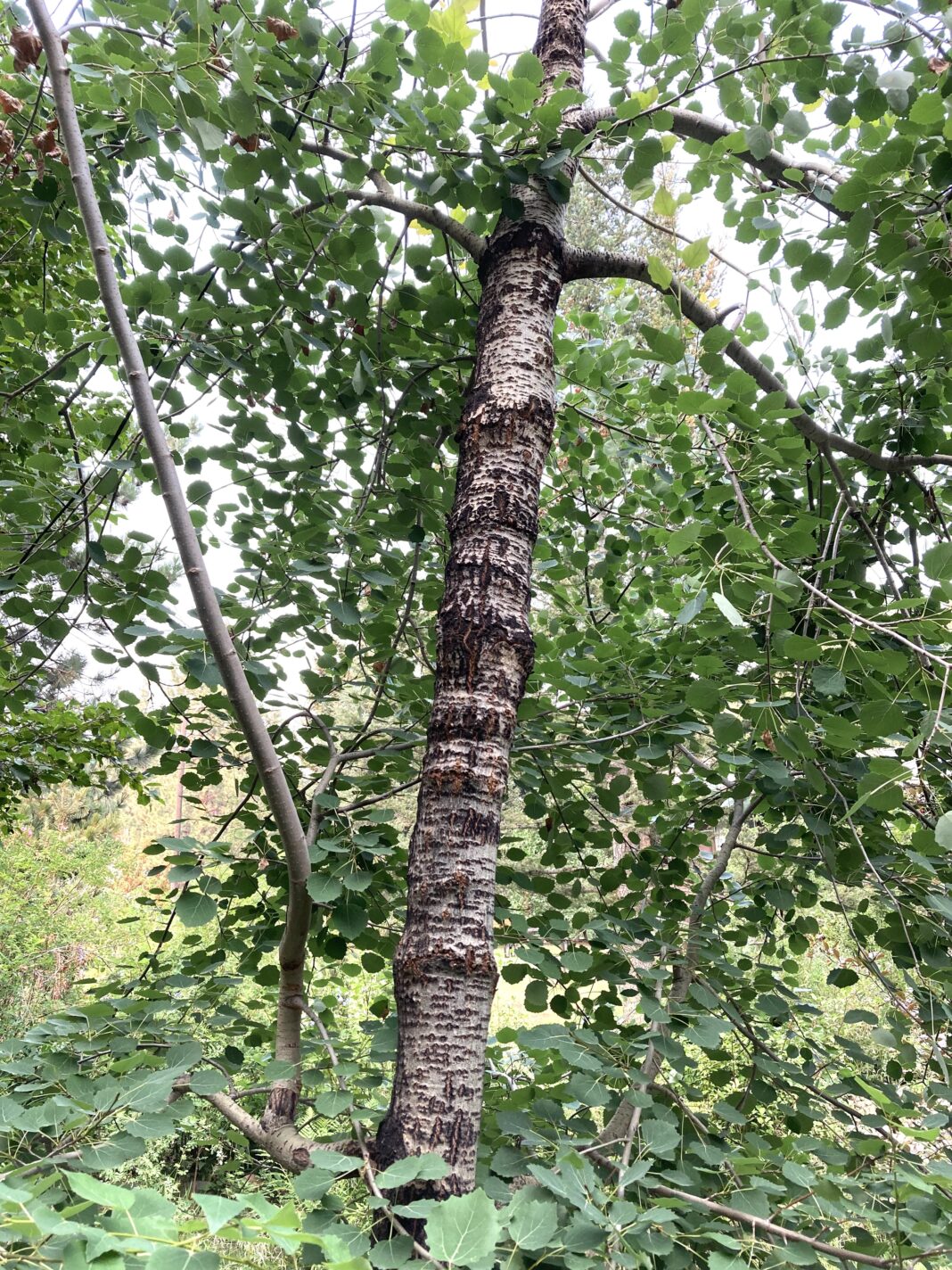
Photos taken yesterday show our sacrificial Aspen. The Sapsuckers started on this tree about eight years ago and we haven’t seen too much damage on very many others since.
There is a benefit to training a new branch or two below the damage. Compared to a new tree, an established tree has a massive root system with only a small amount of branches and foliage to support. It will therefore grow at an extremely fast rate compared to a newly planted tree and will give you a nice large tree in record time.
Yes, it is disheartening when a tree suffers damage and looks a bit unusual. But that’s no reason to remove the tree and start over with a young new tree that will take many years to produce nice shade to enjoy.
Richard Krott is co-founder of Tizer Botanical Gardens & Arboretum