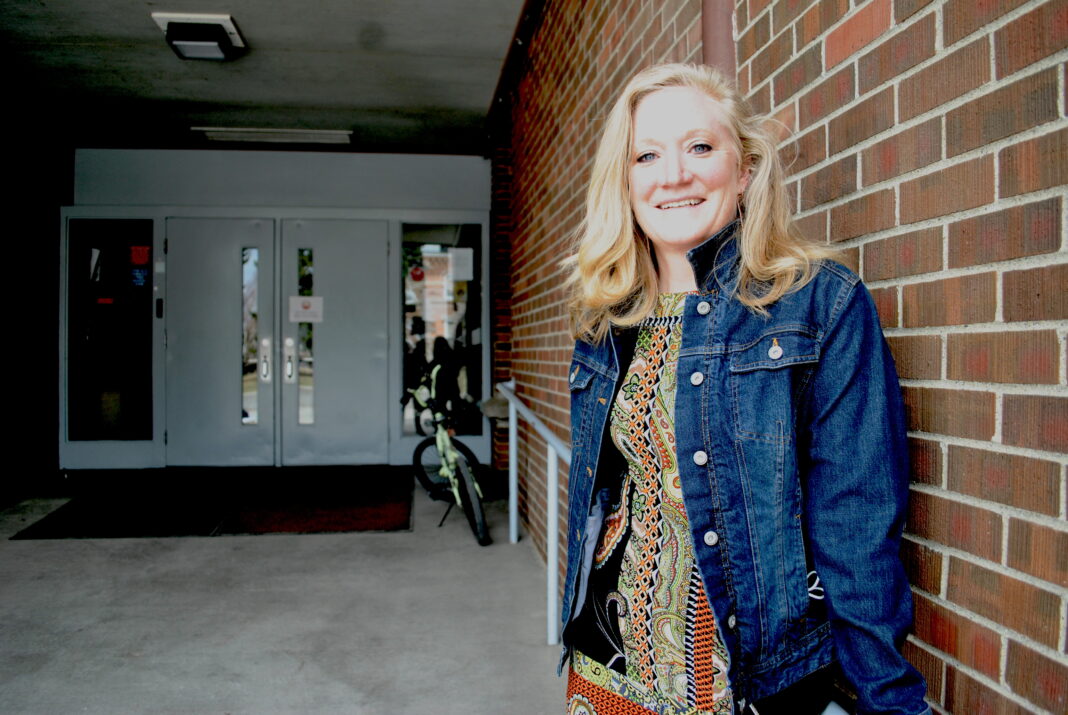
On June 2, the Boulder Elementary School will bid farewell to 10 graduates — and to Maria Pace, its superintendent and principal since 2012. Pace will become director of special education at the Prickly Pear Cooperative in East Helena.
Pace, a Boulder native, spoke with The Monitor about changes she’s seen and been part of at Boulder Elementary; working through the COVID-19 pandemic; and what she sees for the school’s future. The interview has been edited for length and clarity.
The Monitor: Your mother was a teacher. When did you know that you wanted to be an educator, too?
Pace: I studied engineering at Montana Tech. I planned on becoming an engineer or a historian of technology and society. But I got job as a special education para, and I decided to pursue a Master’s in education because I loved that so much. There were a couple of kids I just adored, and I remember thinking, there’s power in this to improve lives — the impact you could have on children and families.
Monitor: You’ve been at Boulder Elementary for 17 years. What has changed in that time?
The Montana Developmental Center leaving certainly did impact demographics. There were families that left, and we’ve had a gradual decline in enrollment. Right now, Boulder’s going through a big change: A lot of people are buying property in rural areas. But as far as the kids themselves and their families, not a lot has changed.
The biggest change in the last couple of years has been the resources we’ve been able to support with literacy grants. The first grant was $300,000 a year for three years. The second was much bigger: $1.55 million over five years. That application was due the week that COVID hit. Rural schools don’t have grants directors, but I had a teacher who just dug in, and a team that worked together. They just barreled ahead. Those grants have brought additional staff, professional development, so much.
Monitor: I’m guessing that, with the pandemic, last year was your most challenging as superintendent.
Last year was the most challenging, for sure. Especially in a small school, when it’s just you as both superintendent and principal: I’m in a position where I’ve got to make some really tough decisions that may not be what everyone wants to hear. If I’m opening a school, people’s lives are on the line – teachers’ lives, parents’ lives. And I had COVID myself, and I got really sick.
But I have a great team that I was able to call on. The other grade school superintendents, Hannah Nieskens [of Whitehall School], Tony Kloker [at Montana City School], all the leaders at the Prickly Pear Co-op, they were so helpful. You could call and ask, what are you doing? There was such comradery. All through last summer, when it was really hard, I had my board chair, Eric Rykal to call, and [Jefferson High School superintendent] Tim Norbeck. I never felt alone.
Monitor: What were some of the biggest challenges – and how did the school respond?
In January, we were having a difficult time with the substitute situation. I recommended hiring three people who just come in every day [to fill in as needed]. Finding additional support staff was important. Then another great thing, we have a licensed clinical social worker on staff that we wrote into the grant, because we thought social and emotional learning was so important at this time. All these elements have helped.
It hasn’t been easy, and people have expressed frustration and burn-out. But we have a board committed to providing support to the staff, students and families, ensuring that we had those needs met. And part of it is, the kids bring so much joy into this. All the interactions with kids bring you joy. Seeing them grow — for me, that’s what makes me feel great.
Monitor: What did you learn from the pandemic that could inform long-term changes at the school?
We’re going to survey our staff at end of year to ask what changes could be made. But one thing I’ve learned is that we have an amazing staff here. This is such a great staff. [Crying] You can’t imagine what they’ve had to go through. Everyone who works here, the custodians, paras, teachers, really wants to do whatever it takes to make this the best place to live, work, and educate students. And the parents have been amazing, too. Everyone has stepped up, which is what a community should do.
But if you think historically about schools, they started in the Industrial Age when you were training people to be workers. We’re no longer there, so the school model has to evolve. There’s benefit in remote learning, but it needs to be done right. It’s hard: You’re taking a complex task like teaching and learning and now you’ve got to do it in dual mode — plus take care of your personal life. I wanted three teachers dedicated just to remote students. We hired a part-time teacher just to do remote for grades 6-8.
Rochelle Hesford and I talk about this a lot: We’ve got limited resources, what can we do, how can we bring the best here with what we have?
Monitor: Is there work you consider unfinished?
We bought the property next door, and I’d still like to do a greenhouse and edible garden there. And seeing through the literacy grant — that’s going to be difficult to let go. I’m just that type of person, I want this to be the best place for kids to come, and there’s so much work to do — and so much opportunity for the new leader. Good schools draw people to a community, and there’s this amazing potential to keep growing.
Monitor: And there’s a building to keep up.
It’s great when you walk into a place where you feel a sense of warmth. When I first took this job, and Lance Peeler was our maintenance supervisor, he instilled in me that importance of continuing to keep a focus on buildings and grounds. Yes, instruction is important, but we have to love this place as much as we love our home. Jim Whealon [former JHS superintendent] told me, the super has to get on the roof, and get down in the boiler room; you have to know as much about that as about teaching. You always have to keep your eye on that, because buildings can go by the wayside.
Monitor: So, do you know how the boiler works?
[Laughs] I got to watch it get put in there. I know a little bit. Another superintendent once told me: “You just have to be able to ask the right questions.”