The Boulder City Council approved a final budget for the 2025 fiscal year at its Sept. 16 meeting. The budget increased by 7% from last year, while the city’s levy rate declined to 137.46 mills, from 137.72 in Fiscal Year 2024.
“The budget was balanced again, and we’re not in any dire need for cash,” said Boulder Mayor Rusty Giulio during the meeting. “It’s not easy, balancing a budget in this day and age. I think we’ve done a very good job.”
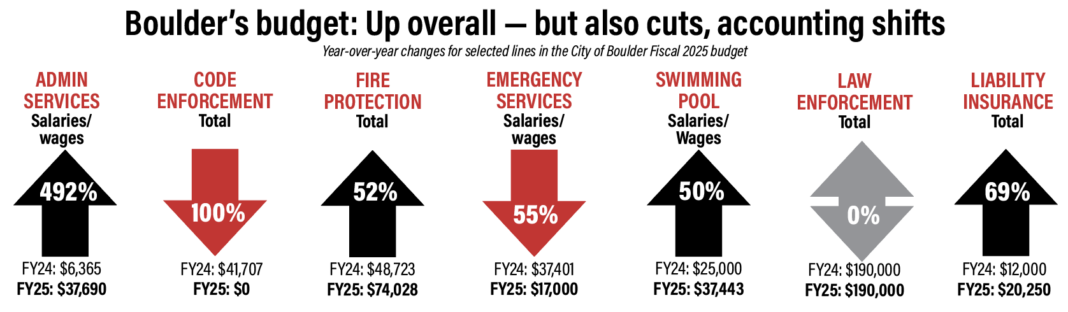
City employees received an across-the-board 3 percent cost of living pay raise, while City Administrator Brian Bullock received a scheduled 10 percent raise. The role of city enforcement officer has been formally struck from the budget, allowing room for the city administrator position, which was created in April.
Rollovers of the County Fuel tax (known as the “old gas tax”) and the Bridge and Road Safety Accountability (BARSA) tax, created a funding surplus for the city roads department. This year’s roads budget incorporates $400,000 from the gas tax, including $227,000 in unspent funds from last year, and $108,000 from the BARSA tax, including $43,665 from last year. The BARSA fund represents total dollars available, not future expected revenues. This month, the city conducted a $138,060 chip-seal pavement restoration operation on three miles of city roads, which drew from last year’s unspent old gas tax funds.
“This year’s roads budget was increased mainly because we weren’t certain how much work we wanted to do,” said Boulder City Clerk Rosemary Perna. “An increase, for any department, does not mean we have to spend it all. It just gives us the flexibility to act on a project without the need for a budget amendment, should we need.”
Two low-interest loans from the state government totalling $7,750, originally acquired to fund a police vehicle and repairs to the roof of city hall, were repaid last year, taking them off the budget. And an anonymous $20,000 donation helped the city pay for an unexpected cost during the pool’s refurbishment last summer. The pool’s total funding was decreased, like the Water and Sewer department, in order to more closely match anticipated revenues to expenditures.
Adjustments were also made to the Boulder Ambulance Service’s budget, eliminating a half-time managerial position created in 2023 with a grant from the Montana Health Care Foundation. This brought the budget for salaries and wages to $17,000, from $37,401 last year. The remaining budget will pay wages for part-time staff, who are only paid when actively responding to an emergency.
The Boulder Volunteer Fire Department saw its total budget increase to $74,028 from $48,723 last year, in anticipation of additional capital expenditures for new radio and other communications equipment.
Boulder stands to collect roughly $234,000 in non-tax revenue this year, including $12,000 from investment earnings, which are up from only $23 in 2021. This, according to city officials, is due to a renegotiation, led by Giulio, with Madison Valley Bank on the interest applied to the city’s investment’s account, which contains roughly $1.4 million dollars accumulated from miscellaneous excess revenues over many years.
Boulder, having spent roughly $250,000 of its $325,000 in American Rescue Plan Act (ARPA) funding received from the federal government, expects to receive an additional $834,718 this year for its water systems improvement effort. This funding will be used to help complete new well construction, and improve existing water and sewer systems. The city’s water and sewer service had its expenditure budget cut by roughly a third in FY25, as part of the city’s effort to correct over budgeting and match the service’s expenditures to anticipated revenues.